GHK-Cu Research Brief: Copper-Peptide Studies in Matrix Remodelling
Circulating GHK levels are reported to fall with age, which is why the copper complex became a focus of skin and connective-tissue research. This brief summarises the wound, matrix-metalloproteinase and gene-expression studies and their limits.
LWL Research Brief
Evidence · Preliminary01In-vitro, gene-expression analysis and animal wound studies, plus reviews.
- 02Population
- Cultured fibroblasts; experimental animal wounds; public gene-expression datasets.
- 03Intervention
- GHK-Cu, the glycyl-L-histidyl-L-lysine copper(II) complex.
- 04Primary endpoint
- Matrix metalloproteinase activity, wound-healing processes, gene-expression patterns.
05Results
- In experimental wounds, the GHK-copper complex modulated expression and activation of matrix metalloproteinases involved in tissue remodelling (J Invest Dermatol 1999).
- An analysis of gene-expression datasets reported GHK shifting transcription of many genes in vitro (Biomed Res Int 2014).
06Limitations
- Much of the evidence is cell, animal or computational; human data are small topical cosmetic studies.
- Gene-expression shifts in vitro are not clinical outcomes.
07What this evidence does NOT demonstrate
- Anti-ageing or skin outcomes from injected GHK-Cu in people.
- That in-vitro gene-expression changes produce measurable effects in humans.
08Citations
- Simeon et al. Modulation of matrix metalloproteinases in wounds by GHK-Cu. J Invest Dermatol, 1999. PMID 10383745 ↗
- Pickart et al. GHK and DNA: resetting the human genome to health. Biomed Res Int, 2014. PMID 25302294 ↗
- Pickart et al. GHK peptide as a natural modulator of multiple pathways in skin regeneration (review). Biomed Res Int, 2015. PMID 26236730 ↗
Summary of published literature · For research use only · Not medical advice
GHK is a three-amino-acid sequence — glycine, histidine, lysine — that occurs naturally in human plasma and binds copper with high affinity. The bound form, GHK-Cu, is the one the research is about.
The observation that drove decades of work is simple: plasma GHK concentration is high in early adulthood and falls substantially with age. Researchers noticed the decline tracked alongside the changes in skin quality, wound healing speed and connective tissue resilience that accompany ageing, and asked whether the two were related.
It is a signal, not a building block
This is the part most often described wrongly. GHK-Cu is not collagen, and taking it does not supply collagen. It is a signalling molecule: the research describes it influencing the expression of genes involved in producing collagen and elastin — the structural proteins your body builds itself.
The difference matters. A building-block model says you are topping up a missing ingredient. A signalling model says the machinery is still there and the instruction has weakened. The GHK-Cu literature sits firmly in the second.
The copper is not incidental
Copper is a required cofactor for lysyl oxidase, the enzyme that cross-links collagen and elastin fibres into a structure with actual tensile strength. Uncross-linked collagen is not much use. GHK's copper-binding affinity is why it is studied as a delivery route for copper into tissue rather than simply as a peptide that happens to have a metal attached.
Where the research clusters
- Skin: elasticity, firmness, fine lines and dermal thickness — the largest and oldest body of work.
- Hair: follicle size and density, following the same connective-tissue reasoning.
- Wound repair: where the copper cofactor role is most directly relevant.
- Gene expression: broader work on its effect across large numbers of genes, which is where the longevity interest comes from.
What we supply
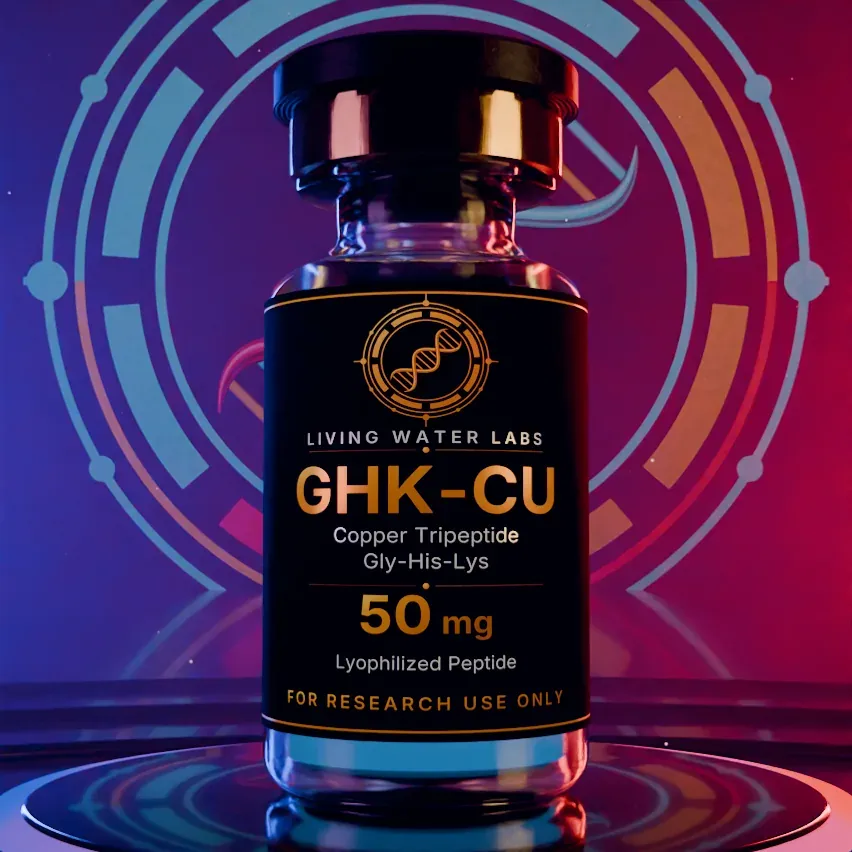
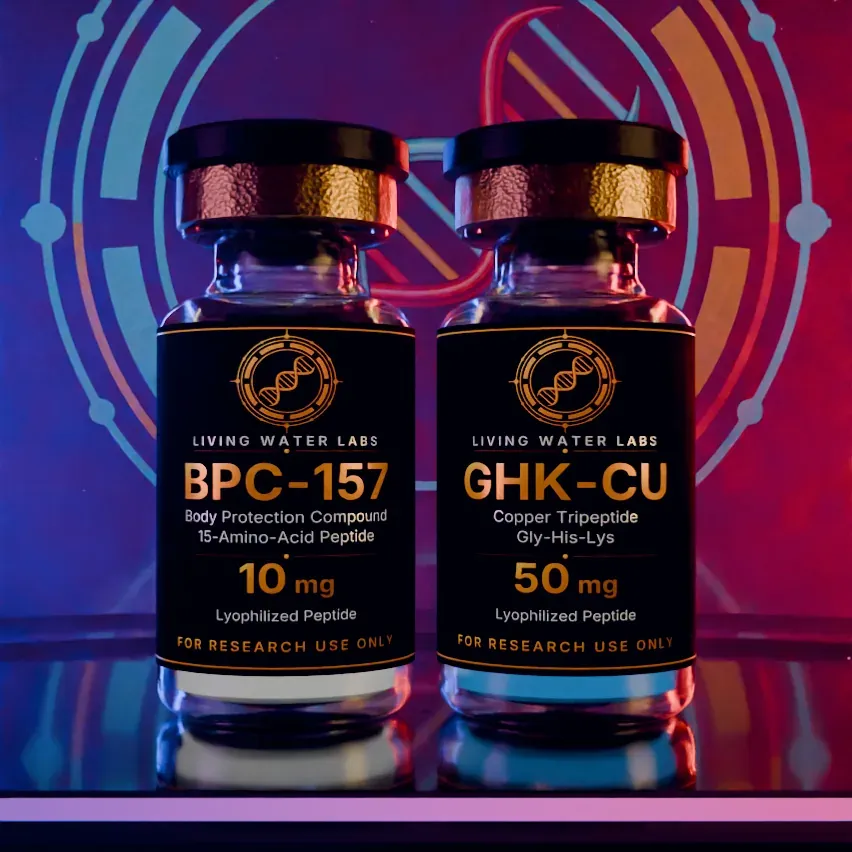
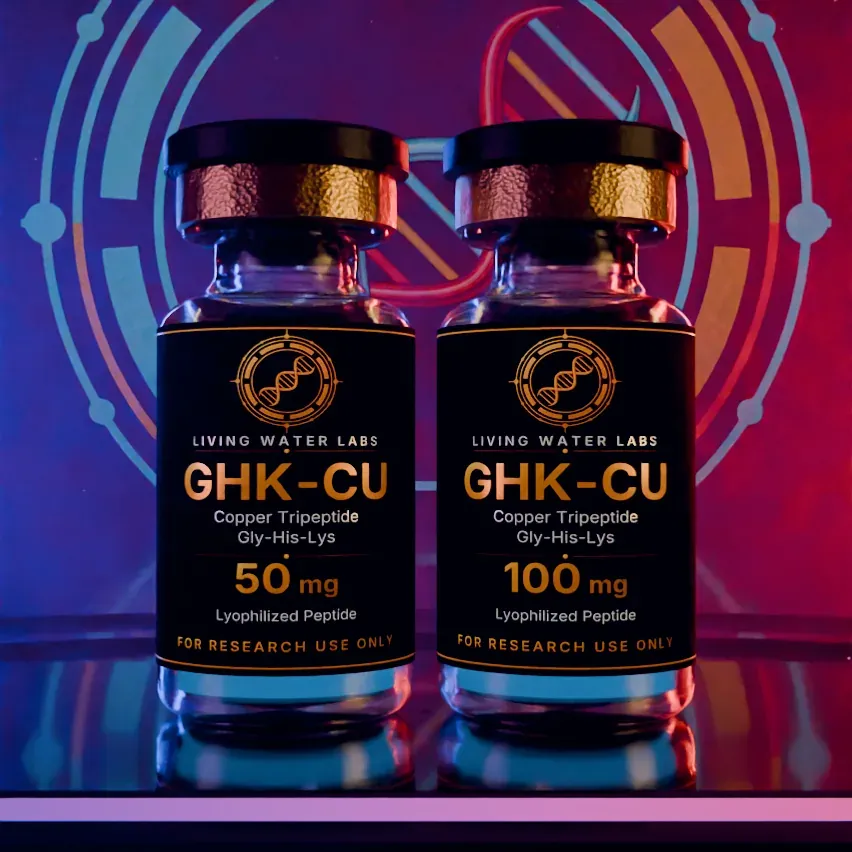
Our GHK-Cu comes as a 50 mg or 100 mg lyophilised vial, HPLC-verified, with a purity Certificate of Analysis available on request. It is also one of the four peptides in the KLOW blend.
Supplied strictly for laboratory research purposes. Not for human or veterinary use.
Reviewed for research accuracy. Educational / research context only — not medical advice.