BPC-157 Research Brief: Preclinical Tendon and Angiogenesis Findings
BPC-157 is a synthetic fifteen-amino-acid fragment of a gastric-juice protein. This brief summarises the cell and rodent studies on tendon fibroblasts and angiogenesis, and why a 2025 systematic review notes the absence of controlled human trials.
LWL Research Brief
Evidence · Preliminary01Preclinical: cell-culture and rodent injury-model studies, plus reviews.
- 02Population
- Cultured rat tendon fibroblasts; rats with muscle, tendon and ligament injuries.
- 03Intervention
- BPC-157, a synthetic 15-amino-acid peptide from a gastric-juice protein sequence, given experimentally.
- 04Primary endpoint
- Fibroblast survival, outgrowth and migration in vitro; angiogenesis and healing markers in injured tissue.
05Results
- In cultured tendon fibroblasts, BPC-157 increased cell survival, outgrowth and migration (J Appl Physiol 2011).
- In rat muscle- and tendon-injury models, BPC-157 modulated angiogenesis associated with the healing response (J Physiol Pharmacol 2009).
06Limitations
- Nearly all data come from rodent and cell models, largely from a small number of research groups.
- A 2025 systematic review notes the absence of controlled human trials.
07What this evidence does NOT demonstrate
- Any healing effect, dose or safety profile in people.
- That rodent repair results translate to human tendons, gut or ligaments.
08Citations
- Chang et al. The promoting effect of BPC 157 on tendon healing. J Appl Physiol, 2011. PMID 21030672 ↗
- Modulatory effect of BPC 157 on angiogenesis in muscle and tendon healing. J Physiol Pharmacol, 2009. PMID 20388964 ↗
- BPC 157 and its role in accelerating musculoskeletal soft tissue healing (review). Cell Tissue Res, 2019. PMID 30915550 ↗
- Emerging use of BPC-157 in orthopaedic sports medicine: a systematic review. HSS J, 2025. PMID 40756949 ↗
Summary of published literature · For research use only · Not medical advice
Your stomach lining is one of the most hostile environments in your body, and it repairs itself constantly. Researchers looking for the reason isolated a protective compound in human gastric juice, and from it a fifteen-amino-acid fragment: Body Protection Compound 157.
That origin is the whole story. BPC-157 is not a foreign molecule engineered to force a response. It is a sequence your own digestive tract already produces, studied in isolation to see what it does when it is not diluted by everything else going on in the gut.
The mechanism the research keeps returning to
Most of the interesting BPC-157 literature converges on one thing: angiogenesis, the formation of new blood vessels. Damaged tissue heals at the speed its blood supply allows. Tendons and ligaments are notoriously slow to recover for exactly this reason — they are poorly vascularised compared to muscle, so the oxygen, amino acids and immune cells that repair work depends on arrive slowly and in small amounts.
BPC-157 is studied for upregulating the signalling that builds new capillary networks into damaged tissue. It is not accelerating healing by a separate mechanism so much as removing the bottleneck on the one the body already uses.
Where the research clusters
- The gut lining: the tissue it was isolated from, and where the largest body of work sits — intestinal barrier integrity and the mucosal layer.
- Tendon and ligament: the connective tissue that heals slowest, for the vascular reason above.
- Muscle: recovery from mechanical strain rather than from acute injury.
- The gut–brain axis: a newer and more speculative direction, following the observation that gut barrier state and neurological signalling are not independent.
Why it is almost always paired
BPC-157 acts locally and structurally. TB-500 acts systemically, guiding repair cells toward a site rather than building the supply line into it. The two are studied together often enough that the pairing has become the default in recovery research — one improves the road, the other directs the traffic. It is also why both appear in the KLOW blend alongside GHK-Cu and KPV.
What we supply
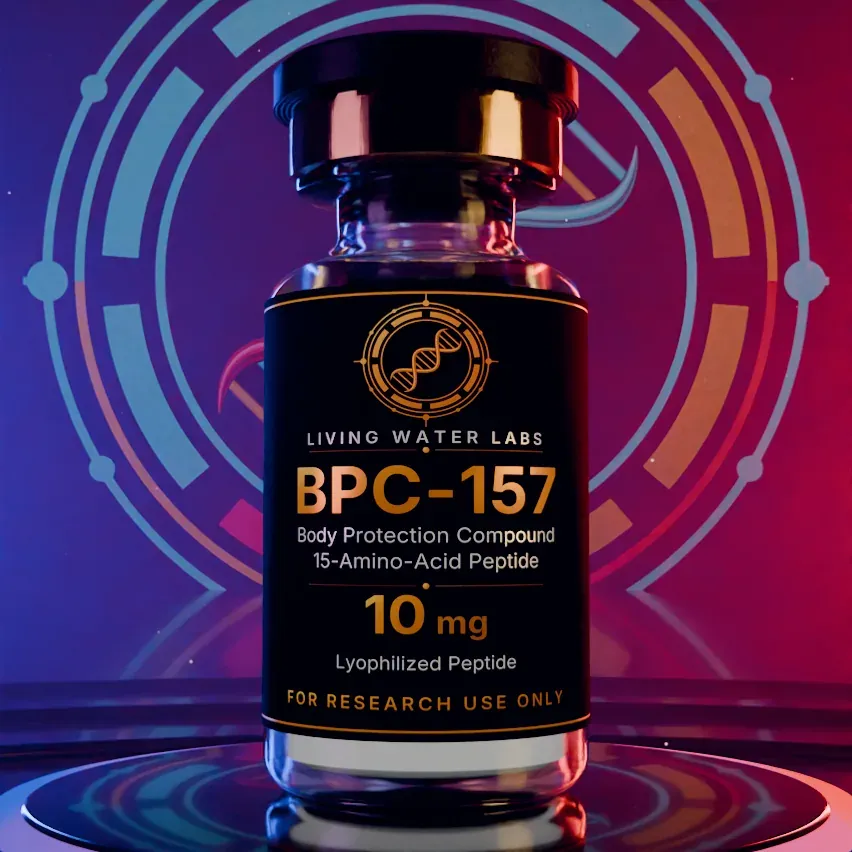
Our BPC-157 is a 10 mg lyophilised vial, HPLC-verified, with a purity Certificate of Analysis available on request. Lyophilised means freeze-dried: the water that drives peptide degradation has been removed, which is why the powder is stable at ambient temperature in transit and why it is reconstituted rather than shipped as a solution.
Supplied strictly for laboratory research purposes. Not for human or veterinary use.
Research synergies · compounds that fit together
Two halves of the repair process
BPC-157 + TB-500
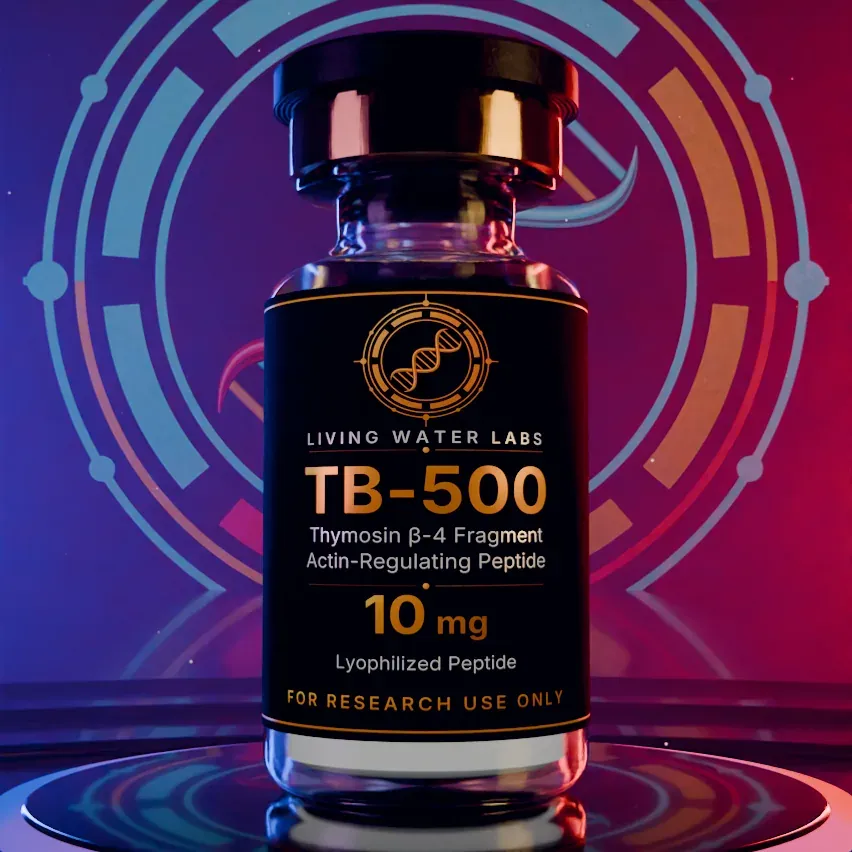
BPC-157 is studied for how it supports new blood-vessel formation and growth-factor signalling at an injury site. Thymosin β4, the parent of TB-500, binds actin and is studied for how cells migrate into damaged tissue. One brings the supply lines, the other moves the workforce in, which is why researchers so often look at them side by side.
Rebuilding the scaffold and the blood supply
GHK-Cu + BPC-157
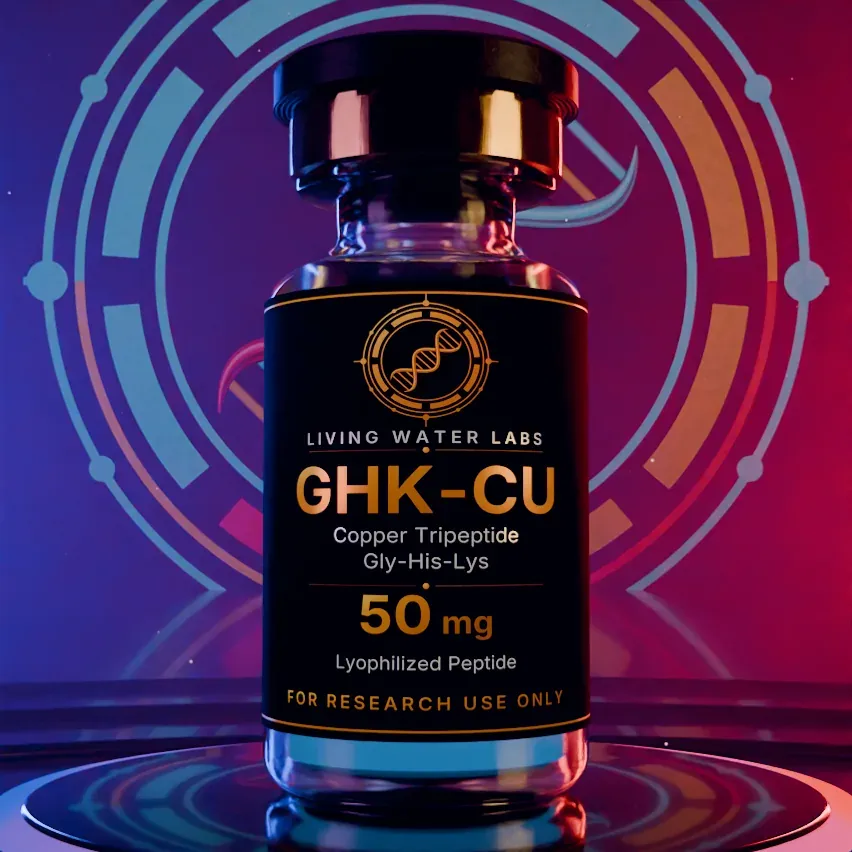
GHK-Cu is a copper-binding tripeptide studied for switching on collagen and matrix-remodelling genes and for regulating the enzymes that clear damaged tissue. BPC-157 is studied on the vascular side of repair. Matrix plus blood supply is the logic behind the Glow and Restore stacks.
Reviewed for research accuracy. Educational / research context only — not medical advice.