TB-500 Research Brief: Thymosin Beta-4 in Cell-Migration and Wound Models
TB-500 is a synthetic fragment of thymosin beta-4. This brief summarises the animal wound and corneal-injury studies of the full-length protein, and the gap between that literature and the fragment itself.
LWL Research Brief
Evidence · Preliminary01Preclinical animal studies and reviews of thymosin beta-4 (Tβ4).
- 02Population
- Mouse corneal alkali-injury model; adult-mammal middle-ear lesion model; reviews spanning cardiac and dermal models.
- 03Intervention
- Thymosin beta-4. TB-500 is a synthetic fragment of Tβ4; most published work studies the full-length peptide.
- 04Primary endpoint
- Wound closure and inflammation markers; tissue repair in lesion models.
05Results
- In a mouse alkali-injury model, topical Tβ4 promoted corneal wound closure and reduced inflammation (Exp Eye Res 2002).
- Reviews describe Tβ4’s actin-binding chemistry and reported regenerative activity across cardiac, corneal and dermal repair models.
06Limitations
- The evidence is for thymosin beta-4; data on the TB-500 fragment itself are sparse.
- Human data are limited to early ophthalmic evaluation of Tβ4 formulations.
07What this evidence does NOT demonstrate
- That TB-500 behaves like full-length thymosin beta-4.
- Systemic repair, recovery or safety outcomes in people.
08Citations
- Sosne et al. Thymosin beta 4 promotes corneal wound healing after alkali injury. Exp Eye Res, 2002. PMID 11950239 ↗
- Thymosin beta4: a multi-functional regenerative peptide (review). Expert Opin Biol Ther, 2012. PMID 22074294 ↗
- Thymosin beta 4 and the eye: the journey from bench to bedside (review). Expert Opin Biol Ther, 2018. PMID 30063853 ↗
Summary of published literature · For research use only · Not medical advice
Thymosin Beta-4 is one of the most abundant proteins inside human cells, and it is present in wound fluid at concentrations that made researchers look closely at what it was doing there. TB-500 is a synthetic fragment of that protein — the active region, isolated.
Cell migration is the unglamorous half of healing
It is easy to think of repair as construction: build new tissue where the old tissue failed. But before anything is built, the cells that do the building have to physically travel to the site. That movement is called cell migration, and it is regulated, not random.
Thymosin Beta-4 binds actin — the protein filament that gives a cell its structure and, crucially, its ability to change shape and move. By regulating actin, it influences how readily repair cells can migrate into damaged tissue. This is the mechanism the TB-500 research is built on.
Systemic, not local
This is the practical difference between TB-500 and BPC-157, and the reason they are studied as a pair rather than as alternatives. BPC-157's most-documented effect is local and vascular. TB-500 is investigated for a whole-body repair signal, which is why it appears so often in research protocols concerned with general recovery capacity rather than with one specific damaged structure.
Where the research clusters
- Flexibility and range of motion: connective tissue quality rather than muscle strength.
- Recovery from repeated mechanical strain: the accumulated load case rather than the acute injury case.
- Inflammatory modulation: studied as part of the same repair cascade, not as a separate anti-inflammatory action.
What we supply
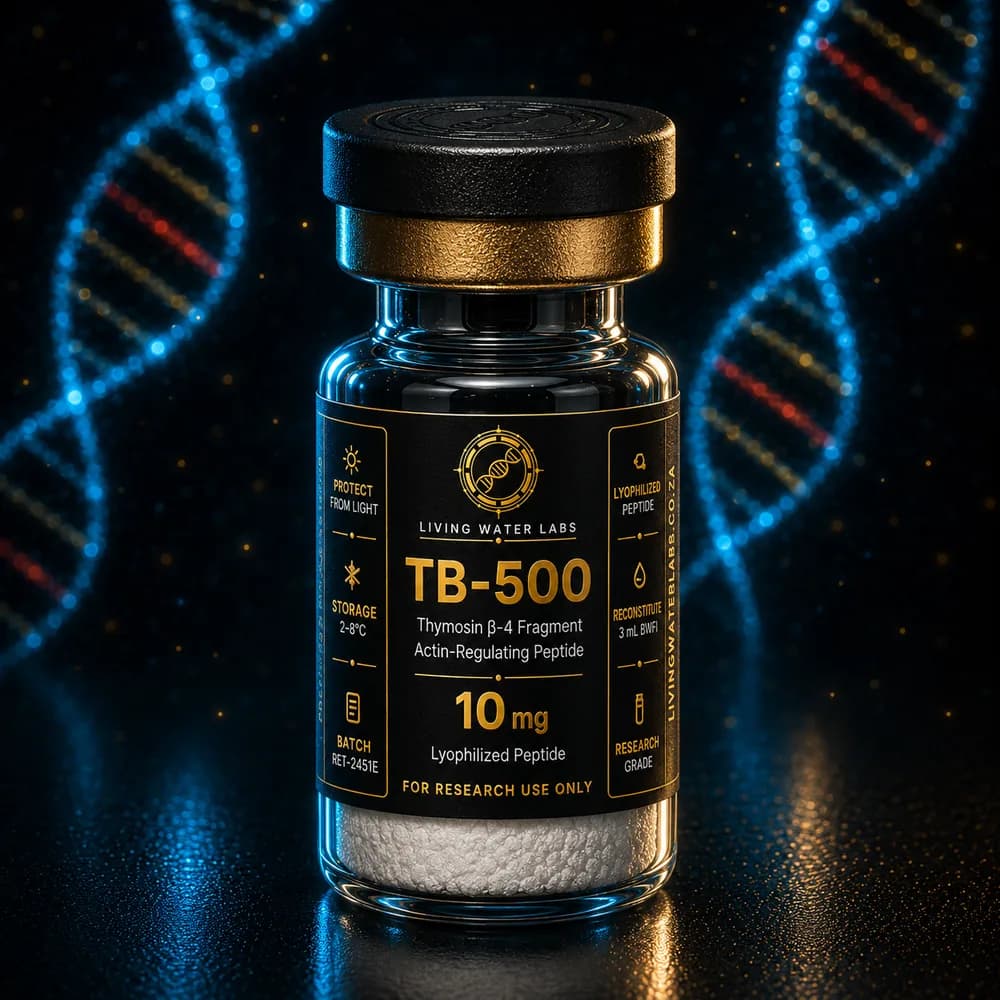
Our TB-500 is a 10 mg lyophilised vial, HPLC-verified, with a purity Certificate of Analysis available on request.
Supplied strictly for laboratory research purposes. Not for human or veterinary use.
Research synergies · compounds that fit together
Two halves of the repair process
BPC-157 + TB-500
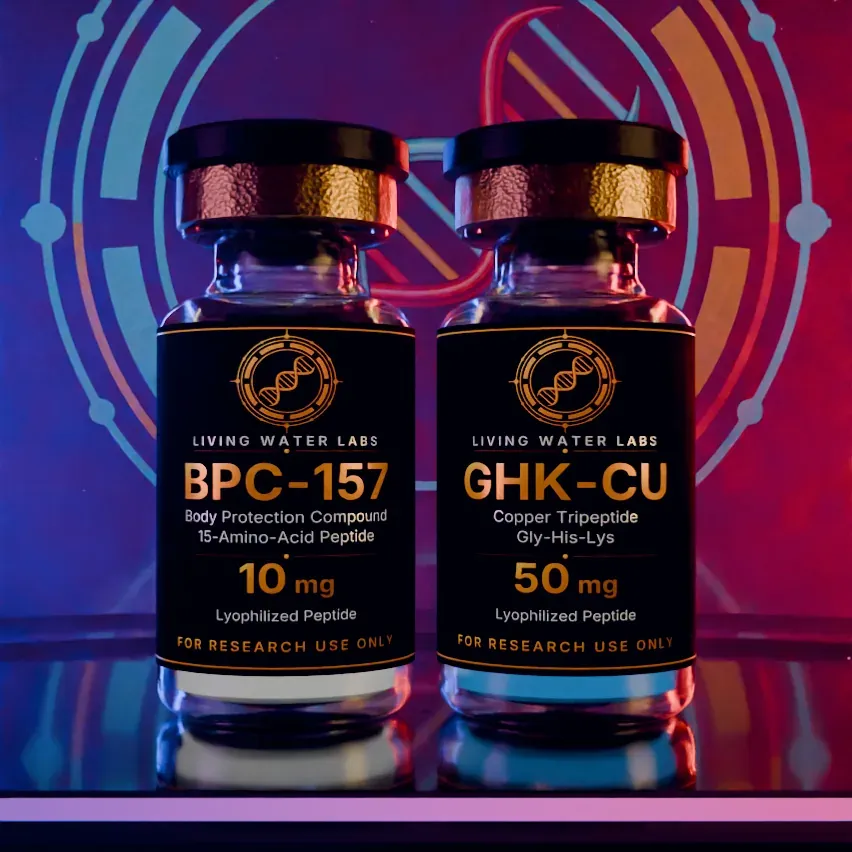
BPC-157 is studied for how it supports new blood-vessel formation and growth-factor signalling at an injury site. Thymosin β4, the parent of TB-500, binds actin and is studied for how cells migrate into damaged tissue. One brings the supply lines, the other moves the workforce in, which is why researchers so often look at them side by side.
Reviewed for research accuracy. Educational / research context only — not medical advice.