Larazotide Acetate vs BPC-157
Larazotide is an oral peptide designed to tighten intestinal tight junctions and was trialled in coeliac disease. BPC-157 is studied in animal models of gut injury.
Larazotide Acetate
An 8-amino-acid tight-junction regulator designed to reduce intestinal permeability, studied mainly in coeliac disease.
BEST STUDIED FOR
Repair & immune
Read the cited profile →

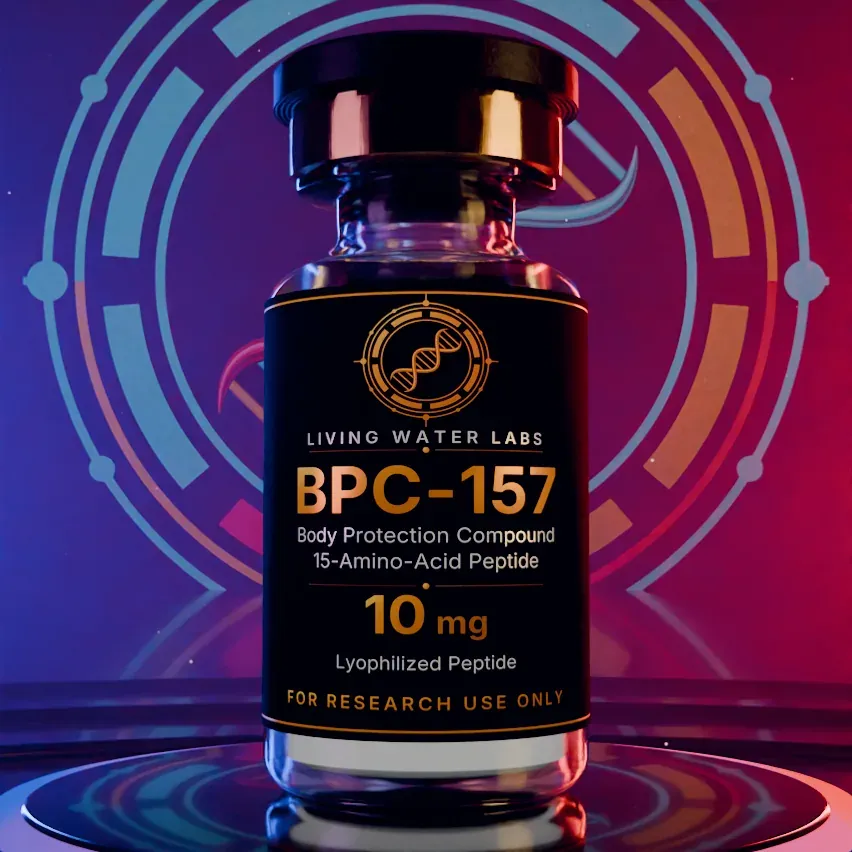
BPC-157
BPC-157 is a synthetic pentadecapeptide derived from a protective sequence found in human gastric juice.
BEST STUDIED FOR
Preclinical soft-tissue and gut-healing models
R489View product →
Side by side · to buy
Price, purity and dispatch
| Compare | Larazotide Acetate | BPC-15710mg |
|---|---|---|
| Price | — | R489 |
| Cost per mg | — | R48.9 / mg |
| Purity (Janoshik) | — | 99.427%HPLC, published |
| Stock | — | In stock |
| Dispatch | — | Same dayPaid before 12:00, Mon–Fri |
| Certificate | — | View CoA → |
| Literature | — | 4 papers → |
| Research focus | Repair & immune | Preclinical soft-tissue and gut-healing models |
| Read the cited profile |
Prices are read live from the catalogue. Cost per mg is the vial price over its stated mg. Purity is shown only where the certificate is published. Every compound is supplied for laboratory research only.
SIDE BY SIDE
| Larazotide Acetate | BPC-157 | |
|---|---|---|
| The key difference | Tight-junction regulator (zonulin antagonist) | Preclinical gut-protective peptide |
| Class | Repair & immune | Repair & immune |
| Mechanism | Larazotide is proposed to antagonise zonulin-mediated opening of epithelial tight junctions, limiting paracellular passage of gliadin fragments in the gut. | BPC-157 is a synthetic pentadecapeptide derived from a protective sequence found in human gastric juice. |
| Status | Reached phase 3 in coeliac disease, which was discontinued; remains a reference tight-junction research compound, including in colitis and arthritis models. | Investigational; not an approved medicine anywhere. The evidence base is preclinical, and a 2025 systematic review noted the absence of controlled human trials. |
| Reported safety signals | Clinical trials reported it as well tolerated; efficacy, not safety, ended the phase 3 programme. | No controlled human safety data; published findings are from animal and cell models. |
| A key study | Reviews tight-junction regulation in coeliac disease with a focus on larazotide. (Ther Adv Gastroenterol 2016, PMID 26770266) | In cultured tendon fibroblasts, BPC-157 increased cell survival, outgrowth and migration in vitro. (J Appl Physiol (1985) 2011, PMID 21030672) |
WHEN TO RESEARCH WHICH
Larazotide for gut-permeability research with human trial data; BPC-157 for preclinical mucosal-healing models. Both are discussed here strictly as research compounds; nothing on this page is medical advice or a dosing guide.
REFERENCES (PUBMED)
- [Larazotide Acetate] The potential utility of tight junction regulation in celiac disease: focus on larazotide acetate — Ther Adv Gastroenterol 2016. PMID 26770266
- [Larazotide Acetate] Targeting zonulin and intestinal epithelial barrier function to prevent onset of arthritis — Nat Commun 2020. PMID 32332732
- [Larazotide Acetate] Antibacterial hyaluronic acid hydrogel with sustained release of larazotide as effective colitis treatment — J Control Release 2025. PMID 40915363
- [BPC-157] The promoting effect of pentadecapeptide BPC 157 on tendon healing involves tendon outgrowth, cell survival, and cell migration — J Appl Physiol (1985) 2011. PMID 21030672
- [BPC-157] Modulatory effect of gastric pentadecapeptide BPC 157 on angiogenesis in muscle and tendon healing — J Physiol Pharmacol 2009. PMID 20388964
- [BPC-157] Gastric pentadecapeptide body protection compound BPC 157 and its role in accelerating musculoskeletal soft tissue healing — Cell Tissue Res 2019. PMID 30915550
FREQUENTLY ASKED
What is the difference between Larazotide Acetate and BPC-157?
Larazotide is an oral peptide designed to tighten intestinal tight junctions and was trialled in coeliac disease. BPC-157 is studied in animal models of gut injury.
What is the regulatory status of Larazotide Acetate and BPC-157?
Larazotide Acetate: Reached phase 3 in coeliac disease, which was discontinued; remains a reference tight-junction research compound, including in colitis and arthritis models. BPC-157: Investigational; not an approved medicine anywhere. The evidence base is preclinical, and a 2025 systematic review noted the absence of controlled human trials.
What safety signals have been reported?
Larazotide Acetate: Clinical trials reported it as well tolerated; efficacy, not safety, ended the phase 3 programme. BPC-157: No controlled human safety data; published findings are from animal and cell models.
Which studies is this comparison based on?
For Larazotide Acetate: “The potential utility of tight junction regulation in celiac disease: focus on larazotide acetate” (PMID 26770266); “Targeting zonulin and intestinal epithelial barrier function to prevent onset of arthritis” (PMID 32332732); “Antibacterial hyaluronic acid hydrogel with sustained release of larazotide as effective colitis treatment” (PMID 40915363). For BPC-157: “The promoting effect of pentadecapeptide BPC 157 on tendon healing involves tendon outgrowth, cell survival, and cell migration” (PMID 21030672); “Modulatory effect of gastric pentadecapeptide BPC 157 on angiogenesis in muscle and tendon healing” (PMID 20388964); “Gastric pentadecapeptide body protection compound BPC 157 and its role in accelerating musculoskeletal soft tissue healing” (PMID 30915550).
MORE COMPARISONS
All products supplied for research purposes only. Not for human consumption.
In stock · ships from South Africa
Shop this comparison


Supplied for laboratory research only · not for human use