Epithalon vs Pinealon
Epithalon and Pinealon are both short peptide bioregulators from the same Russian research lineage, which is why they are compared — but they target different systems. Epithalon is the telomere and pineal-gland longevity peptide; Pinealon is the neuroprotective, cognition-focused one.
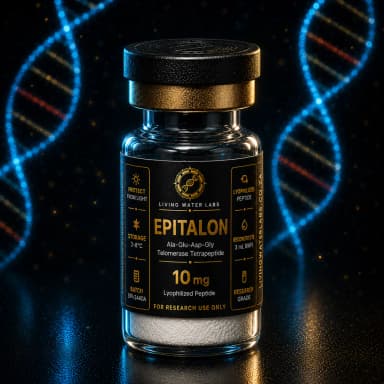
Epithalon
A tetrapeptide bioregulator studied for telomerase, the pineal gland and longevity.
BEST STUDIED FOR
Telomere & epigenetic-ageing research
R339View product →
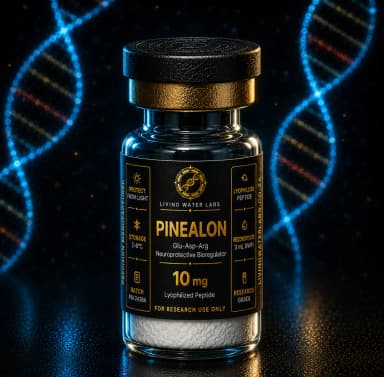
Pinealon
A tripeptide bioregulator studied for neuroprotection and cognition.
BEST STUDIED FOR
Neuroprotection & cognitive-defence research
R389View product →
SIDE BY SIDE
| Epithalon | Pinealon | |
|---|---|---|
| Sequence | Ala-Glu-Asp-Gly (tetrapeptide) | Glu-Asp-Arg (tripeptide) |
| Primary research target | Telomerase activity, pineal gland, longevity | Neuroprotection, brain cell defence, cognition |
| System | Endocrine / whole-organism ageing | Central nervous system |
| Mechanism cited | Telomerase induction; melatonin/circadian regulation | Antioxidant and anti-apoptotic protection of neurons |
| Research lineage | Russian bioregulator research (St Petersburg) | Russian bioregulator research (St Petersburg) |
| Often studied for | Epigenetic-ageing and telomere models | Cognition and hypoxia / oxidative-stress models |
WHEN TO RESEARCH WHICH
Research Epithalon when the interest is telomere biology, the pineal gland and epigenetic ageing — it is the most-cited bioregulator for longevity. Research Pinealon when the interest is neuroprotection, cognition and cellular defence in brain tissue. Both are ultra-short peptide bioregulators and are sometimes studied in sequence.
FREQUENTLY ASKED
What is the difference between Epithalon and Pinealon?
Epithalon is a tetrapeptide bioregulator studied for telomerase, the pineal gland and longevity. Pinealon is a tripeptide bioregulator studied for neuroprotection and cognition. Same research lineage, different target systems.
Can Epithalon and Pinealon be researched together?
They are sometimes studied in sequence — Epithalon for whole-organism ageing, Pinealon for the central nervous system. Both are short peptide bioregulators supplied for research purposes only.
Which is the longevity peptide?
Epithalon is the longevity and telomere bioregulator of the two, with decades of peer-reviewed research. Pinealon is neuroprotection-focused. Both are HPLC-verified with a Certificate of Analysis.
MORE COMPARISONS
All products supplied for research purposes only. Not for human consumption.