BPC-157 vs TB-500
BPC-157 and TB-500 are the two most-researched soft-tissue recovery peptides, and they are frequently compared — and combined — in the literature. They act through different mechanisms, so which one a protocol leans on depends on whether the research target is a localised injury or system-wide recovery.
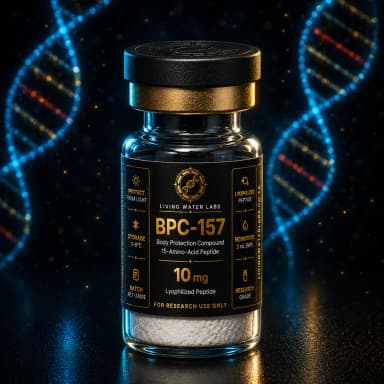
BPC-157
A stable gastric pentadecapeptide (Body Protection Compound) studied for localised repair.
BEST STUDIED FOR
Gut lining, tendon & ligament repair research
R439View product →
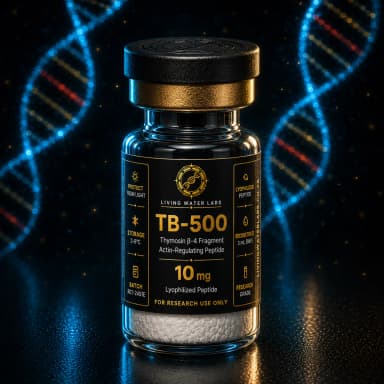
TB-500
A synthetic fragment of Thymosin Beta-4 studied for systemic recovery and cell migration.
BEST STUDIED FOR
Whole-body recovery & flexibility research
R499View product →
SIDE BY SIDE
| BPC-157 | TB-500 | |
|---|---|---|
| Origin | Synthetic peptide derived from a protein found in gastric juice | Synthetic analog of the naturally occurring Thymosin Beta-4 protein |
| Sequence length | 15 amino acids (pentadecapeptide) | ~7 amino acid active fragment of a 43-residue protein |
| Primary mechanism studied | Angiogenesis and the nitric-oxide / growth-factor pathways; cytoprotection | Actin regulation, cell migration and up-regulation of repair signalling |
| Research focus | Localised — gastrointestinal lining, tendon-to-bone, ligament, soft tissue | Systemic — flexibility, muscle, and broad tissue recovery |
| Onset in research models | Often studied for relatively rapid local effect | Studied for slower, longer-acting systemic distribution |
| Common research context | Gut-health and injury-site repair studies | General recovery and post-exertion repair studies |
| Commonly paired with | TB-500 (the classic recovery stack) | BPC-157 (the classic recovery stack) |
WHEN TO RESEARCH WHICH
Research BPC-157 when the focus is a specific, localised site — gut lining, a tendon or ligament — where its angiogenic, cytoprotective action is studied. Research TB-500 when the interest is systemic flexibility and whole-body recovery via actin regulation and cell migration. The two are the most-cited research pairing precisely because their mechanisms are complementary rather than overlapping.
FREQUENTLY ASKED
What is the difference between BPC-157 and TB-500?
BPC-157 is a gastric pentadecapeptide studied for localised repair — gut lining, tendon and ligament sites — largely via angiogenesis. TB-500 is a Thymosin Beta-4 fragment studied for systemic recovery and flexibility via actin regulation and cell migration. Different mechanisms, different research emphasis.
Can BPC-157 and TB-500 be researched together?
The BPC-157 + TB-500 pairing is the single most-cited recovery research stack precisely because the two mechanisms are complementary. Both are supplied here for research purposes only.
Which is better for recovery research?
Neither is universally "better" — it depends on the research target. Localised injury-site work leans on BPC-157; systemic recovery work leans on TB-500. Both are HPLC-verified and CoA-certified.
MORE COMPARISONS
All products supplied for research purposes only. Not for human consumption.