BPC-157 vs GHK-Cu
BPC-157 and GHK-Cu are both studied for repair, which is why they get compared — but the tissue and the mechanism differ. BPC-157 is the gut-and-tendon recovery peptide; GHK-Cu is the copper peptide for skin, hair and wound research. The overlap is real (both touch wound healing) but the emphasis is distinct.
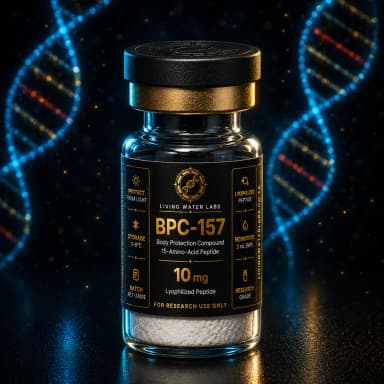
BPC-157
A gastric pentadecapeptide studied for gut, tendon and ligament repair.
BEST STUDIED FOR
Internal & musculoskeletal repair research
R439View product →
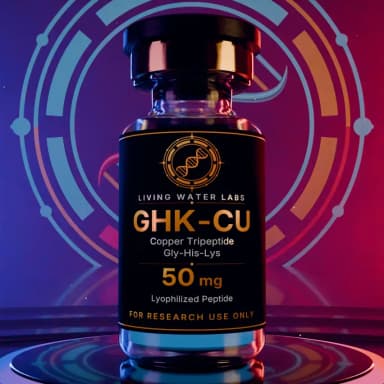
GHK-Cu
Copper tripeptide-1, studied for skin, hair and cosmetic wound repair.
BEST STUDIED FOR
Skin, hair & cosmetic wound research
R449View product →
SIDE BY SIDE
| BPC-157 | GHK-Cu | |
|---|---|---|
| Compound class | Pentadecapeptide (15 amino acids) | Copper-bound tripeptide (3 amino acids) |
| Primary tissue studied | Gut lining, tendon, ligament, soft tissue | Skin, hair follicle, dermal tissue |
| Mechanism emphasis | Angiogenesis, cytoprotection, growth-factor pathways | Collagen synthesis signalling, copper delivery, antioxidant activity |
| Delivery context | Studied injectable / oral in research models | Studied topical and injectable |
| Overlap | Wound healing (systemic / musculoskeletal) | Wound healing (dermal / cosmetic) |
| Commonly paired with | TB-500 for broader recovery | Collagen and topical actives for skin |
WHEN TO RESEARCH WHICH
Research BPC-157 for internal and musculoskeletal repair — gut lining, tendon, ligament — driven by angiogenesis. Research GHK-Cu for skin, hair and cosmetic wound research, driven by collagen signalling and copper delivery. Where the two meet is wound healing, and both are cited there.
FREQUENTLY ASKED
What is the difference between BPC-157 and GHK-Cu?
BPC-157 is a pentadecapeptide studied for internal and musculoskeletal repair (gut, tendon, ligament) via angiogenesis. GHK-Cu is a copper tripeptide studied for skin, hair and cosmetic wound repair via collagen signalling. They overlap only on wound healing.
Can BPC-157 and GHK-Cu be researched together?
Yes — they target largely different tissues, so they are sometimes studied in parallel (BPC-157 for musculoskeletal, GHK-Cu for skin). Both are supplied for research purposes only.
Which is for skin?
GHK-Cu is the skin, hair and cosmetic wound research peptide of the two. BPC-157 is focused on gut and musculoskeletal repair. Both are HPLC-verified and CoA-certified.
MORE COMPARISONS
All products supplied for research purposes only. Not for human consumption.