LL-37 vs KPV
LL-37 is the only human cathelicidin, a host-defence peptide that kills microbes and modulates immunity. KPV is a melanocortin-derived tripeptide studied for dampening inflammation.
LL-37
The only human cathelicidin antimicrobial peptide — a 37-residue host-defence peptide with antimicrobial, anti-biofilm and immune-signalling activity.
BEST STUDIED FOR
Repair & immune
Read the cited profile →
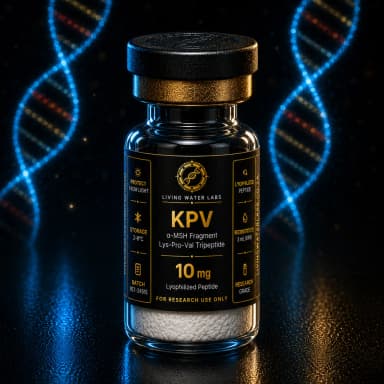
KPV
KPV is the C-terminal tripeptide (Lys-Pro-Val) of alpha-melanocyte-stimulating hormone.
BEST STUDIED FOR
Gut and skin inflammation models
R439View product →
Side by side · to buy
Price, purity and dispatch
| Compare | LL-37 | KPV10mg |
|---|---|---|
| Price | — | R439 |
| Cost per mg | — | R43.9 / mg |
| Purity (Janoshik) | — | 99.919%HPLC, published |
| Stock | — | Restocking |
| Dispatch | — | When restocked |
| Certificate | — | View CoA → |
| Literature | — | 4 papers → |
| Research focus | Repair & immune | Gut and skin inflammation models |
| Read the cited profile | Notify me |
Prices are read live from the catalogue. Cost per mg is the vial price over its stated mg. Purity is shown only where the certificate is published. Every compound is supplied for laboratory research only.
SIDE BY SIDE
| LL-37 | KPV | |
|---|---|---|
| The key difference | Antimicrobial cathelicidin | Anti-inflammatory alpha-MSH fragment |
| Class | Repair & immune | Repair & immune |
| Mechanism | LL-37 disrupts bacterial membranes and biofilms, binds and neutralises endotoxin, and acts as an immune signal (chemotaxis, wound angiogenesis). | KPV is the C-terminal tripeptide (Lys-Pro-Val) of alpha-melanocyte-stimulating hormone. |
| Status | Extensively studied in vitro and in animal models; LL-37-based topical therapeutics remain in development. | Investigational tripeptide (the C-terminal end of alpha-MSH); not an approved medicine. |
| Reported safety signals | Reviews note cytotoxicity at higher concentrations and a role in some inflammatory skin conditions — the reason translation has been slow. | No controlled human safety data; findings are from cell and rodent inflammation models. |
| A key study | Reviews LL-37 as the sole human cathelicidin and its antimicrobial and immunomodulatory activities. (Pharmacol Rep 2016, PMID 27117377) | PepT1-mediated uptake of KPV reduced intestinal inflammation and pro-inflammatory signalling in cell and mouse models. (Gastroenterology 2008, PMID 18061177) |
WHEN TO RESEARCH WHICH
LL-37 for antimicrobial and host-defence research; KPV for inflammatory-signalling models. Both are discussed here strictly as research compounds; nothing on this page is medical advice or a dosing guide.
REFERENCES (PUBMED)
- [LL-37] LL-37: Cathelicidin-related antimicrobial peptide with pleiotropic activity — Pharmacol Rep 2016. PMID 27117377
- [LL-37] Antibiofilm properties of cathelicidin LL-37: an in-depth review — World J Microbiol Biotechnol 2023. PMID 36781570
- [LL-37] Human antimicrobial/host defense peptide LL-37 may prevent the spread of a local infection through multiple mechanisms: an update — Inflamm Res 2025. PMID 40063262
- [KPV] PepT1-mediated tripeptide KPV uptake reduces intestinal inflammation — Gastroenterology 2008. PMID 18061177
- [KPV] Melanocortin-derived tripeptide KPV has anti-inflammatory potential in murine models of inflammatory bowel disease — Inflamm Bowel Dis 2008. PMID 18092346
- [KPV] Critical role of PepT1 in promoting colitis-associated cancer and therapeutic benefits of anti-inflammatory tripeptide KPV — Cell Mol Gastroenterol Hepatol 2016. PMID 27458604
FREQUENTLY ASKED
What is the difference between LL-37 and KPV?
LL-37 is the only human cathelicidin, a host-defence peptide that kills microbes and modulates immunity. KPV is a melanocortin-derived tripeptide studied for dampening inflammation.
What is the regulatory status of LL-37 and KPV?
LL-37: Extensively studied in vitro and in animal models; LL-37-based topical therapeutics remain in development. KPV: Investigational tripeptide (the C-terminal end of alpha-MSH); not an approved medicine.
What safety signals have been reported?
LL-37: Reviews note cytotoxicity at higher concentrations and a role in some inflammatory skin conditions — the reason translation has been slow. KPV: No controlled human safety data; findings are from cell and rodent inflammation models.
Which studies is this comparison based on?
For LL-37: “LL-37: Cathelicidin-related antimicrobial peptide with pleiotropic activity” (PMID 27117377); “Antibiofilm properties of cathelicidin LL-37: an in-depth review” (PMID 36781570); “Human antimicrobial/host defense peptide LL-37 may prevent the spread of a local infection through multiple mechanisms: an update” (PMID 40063262). For KPV: “PepT1-mediated tripeptide KPV uptake reduces intestinal inflammation” (PMID 18061177); “Melanocortin-derived tripeptide KPV has anti-inflammatory potential in murine models of inflammatory bowel disease” (PMID 18092346); “Critical role of PepT1 in promoting colitis-associated cancer and therapeutic benefits of anti-inflammatory tripeptide KPV” (PMID 27458604).
MORE COMPARISONS
All products supplied for research purposes only. Not for human consumption.
In stock · ships from South Africa
In stock now


Supplied for laboratory research only · not for human use