KPV vs TB-500
KPV and TB-500 are both studied in recovery research, and they are compared because they cover its two distinct halves: KPV calms inflammation while TB-500 drives systemic tissue repair. One quiets the fire, the other rebuilds what was damaged.
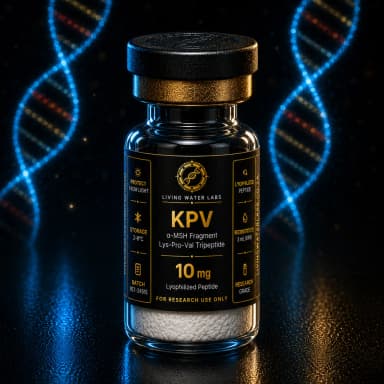
KPV
The alpha-MSH C-terminal tripeptide studied for anti-inflammatory signalling.
BEST STUDIED FOR
Inflammation & immune-modulation research
R439View product →
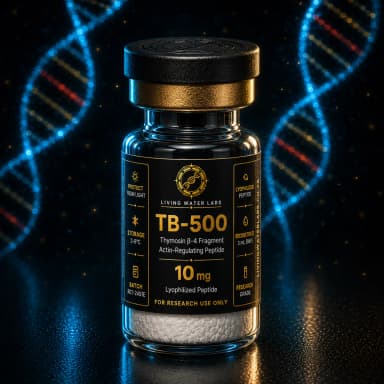
TB-500
A Thymosin Beta-4 fragment studied for systemic recovery and cell migration.
BEST STUDIED FOR
Whole-body tissue-repair research
R499View product →
SIDE BY SIDE
| KPV | TB-500 | |
|---|---|---|
| Sequence | Lys-Pro-Val (tripeptide) | ~7-amino-acid active fragment of Thymosin Beta-4 |
| Parent molecule | C-terminal fragment of alpha-MSH | The naturally occurring Thymosin Beta-4 protein |
| Primary mechanism | Anti-inflammatory, immunomodulatory signalling | Actin regulation, cell migration, repair signalling |
| Recovery role | Calms inflammation | Drives systemic tissue repair |
| Also studied for | Gut and skin inflammation | Flexibility, reduced adhesion / scar formation |
| Combined use | The "calm" half of a recovery pairing | The "repair" half of a recovery pairing |
WHEN TO RESEARCH WHICH
Research KPV when the interest is anti-inflammatory and immune modulation — the alpha-MSH fragment studied for reducing inflammatory signalling. Research TB-500 when the interest is systemic soft-tissue repair, cell migration and wound closure. Inflammation and repair are complementary processes, which is why the two are studied together in recovery and gut research.
FREQUENTLY ASKED
What is the difference between KPV and TB-500?
KPV is an alpha-MSH tripeptide studied for anti-inflammatory and immune signalling; TB-500 is a Thymosin Beta-4 fragment studied for systemic tissue repair and cell migration. One calms inflammation, the other rebuilds tissue.
Can KPV and TB-500 be researched together?
Yes — inflammation and repair are complementary, so KPV and TB-500 are studied together in recovery and gut research. Both are supplied for research purposes only.
Which is for tissue repair?
TB-500 is the systemic tissue-repair peptide; KPV is the anti-inflammatory one. Both are HPLC-verified with a Certificate of Analysis.
MORE COMPARISONS
All products supplied for research purposes only. Not for human consumption.