P021 vs Cerebrolysin
P021 is a defined neurotrophic peptide mimetic tested in Alzheimer’s mouse models; cerebrolysin is a neurotrophic peptide mixture with human stroke and dementia trials.
P021
A tetrapeptide derived from the most active region of ciliary neurotrophic factor (CNTF), studied for neurogenesis and synaptic plasticity.
BEST STUDIED FOR
Nootropic & neuro
Read the cited profile →
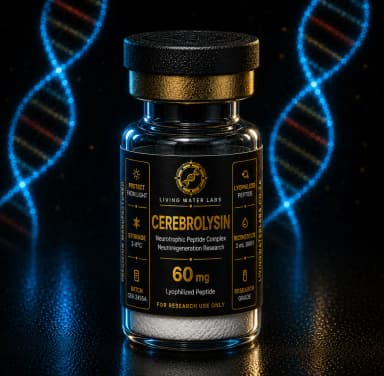
Cerebrolysin
Cerebrolysin is a preparation of low-molecular-weight neuropeptides and amino acids derived from porcine brain.
BEST STUDIED FOR
Stroke-recovery and neurotrophic research
R1 199View product →
Side by side · to buy
Price, purity and dispatch
| Compare | P021 | Cerebrolysin60mg |
|---|---|---|
| Price | — | R1,199 |
| Cost per mg | — | R20.0 / mg |
| Purity (Janoshik) | — | On request |
| Stock | — | Restocking |
| Dispatch | — | When restocked |
| Certificate | — | Request CoA |
| Literature | — | 4 papers → |
| Research focus | Nootropic & neuro | Stroke-recovery and neurotrophic research |
| Read the cited profile | Notify me |
Prices are read live from the catalogue. Cost per mg is the vial price over its stated mg. Purity is shown only where the certificate is published. Every compound is supplied for laboratory research only.
SIDE BY SIDE
| P021 | Cerebrolysin | |
|---|---|---|
| The key difference | Single small CNTF-derived molecule | Neurotrophic peptide mixture |
| Class | Nootropic & neuro | Nootropic & neuro |
| Mechanism | Neurotrophic factors cannot cross the blood–brain barrier and have short half-lives. | Cerebrolysin is a preparation of low-molecular-weight neuropeptides and amino acids derived from porcine brain. |
| Status | Preclinical (ageing, Alzheimer’s, traumatic brain injury and CDKL5 models). No human studies. | A porcine brain-derived peptide preparation registered in several countries for stroke and dementia; not approved in the US. |
| Reported safety signals | No human safety data. | Meta-analyses of stroke trials report safety comparable to placebo, with mixed efficacy results. |
| A key study | An 11-mer CNTF-derived peptide enhanced neurogenesis, synaptic plasticity and memory in mice. (Neurobiol Aging 2011, PMID 19767127) | A pharmacology review of Cerebrolysin reported neurotrophic mechanisms of brain protection and repair. (Drugs Today (Barc) 2012, PMID 22514792) |
WHEN TO RESEARCH WHICH
Cerebrolysin carries human data; P021 is a mechanism-focused tool. Both are discussed here strictly as research compounds; nothing on this page is medical advice or a dosing guide.
REFERENCES (PUBMED)
- [P021] Enhancement of dentate gyrus neurogenesis, dendritic and synaptic plasticity and memory by a neurotrophic peptide — Neurobiol Aging 2011. PMID 19767127
- [P021] Prevention of dendritic and synaptic deficits and cognitive impairment with a neurotrophic compound — Alzheimers Res Ther 2017. PMID 28655344
- [P021] Rescue of cognitive-aging by administration of a neurogenic and/or neurotrophic compound — Neurobiol Aging 2014. PMID 24702821
- [Cerebrolysin] The pharmacology of neurotrophic treatment with Cerebrolysin: brain protection and repair — Drugs Today (Barc) 2012. PMID 22514792
- [Cerebrolysin] Cerebrolysin: a review of its use in dementia — Drugs Aging 2009. PMID 19848437
- [Cerebrolysin] Cerebrolysin for vascular dementia — Cochrane Database Syst Rev 2019. PMID 31710397
FREQUENTLY ASKED
What is the difference between P021 and Cerebrolysin?
P021 is a defined neurotrophic peptide mimetic tested in Alzheimer’s mouse models; cerebrolysin is a neurotrophic peptide mixture with human stroke and dementia trials.
What is the regulatory status of P021 and Cerebrolysin?
P021: Preclinical (ageing, Alzheimer’s, traumatic brain injury and CDKL5 models). No human studies. Cerebrolysin: A porcine brain-derived peptide preparation registered in several countries for stroke and dementia; not approved in the US.
What safety signals have been reported?
P021: No human safety data. Cerebrolysin: Meta-analyses of stroke trials report safety comparable to placebo, with mixed efficacy results.
Which studies is this comparison based on?
For P021: “Enhancement of dentate gyrus neurogenesis, dendritic and synaptic plasticity and memory by a neurotrophic peptide” (PMID 19767127); “Prevention of dendritic and synaptic deficits and cognitive impairment with a neurotrophic compound” (PMID 28655344); “Rescue of cognitive-aging by administration of a neurogenic and/or neurotrophic compound” (PMID 24702821). For Cerebrolysin: “The pharmacology of neurotrophic treatment with Cerebrolysin: brain protection and repair” (PMID 22514792); “Cerebrolysin: a review of its use in dementia” (PMID 19848437); “Cerebrolysin for vascular dementia” (PMID 31710397).
MORE COMPARISONS
All products supplied for research purposes only. Not for human consumption.
In stock · ships from South Africa
In stock now


Supplied for laboratory research only · not for human use