Pinealon vs Cerebrolysin
Pinealon and Cerebrolysin are both studied in neuroprotection and neuro-recovery research, so they are naturally compared — but one is a single defined tripeptide and the other is a complex, standardised mixture of neuropeptides and amino acids. Precision versus breadth.
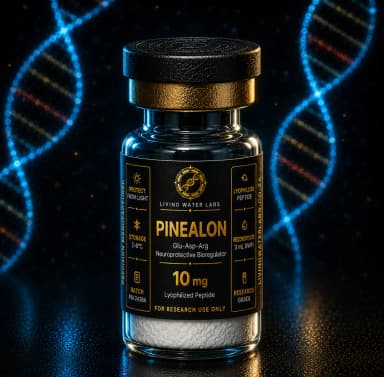
Pinealon
A single EDR tripeptide bioregulator studied for neuroprotection.
BEST STUDIED FOR
Defined-compound neuroprotection research
R399View product →
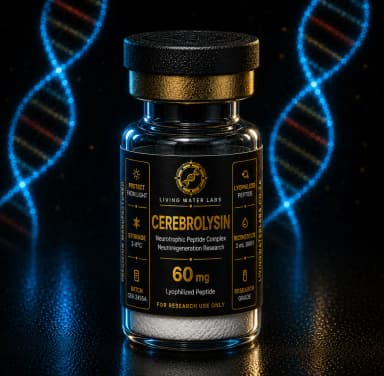
Cerebrolysin
A standardised mixture of neuropeptides and amino acids studied for neurotrophic effects.
BEST STUDIED FOR
Broad neurotrophic & neuro-recovery research
R1 199View product →
SIDE BY SIDE
| Pinealon | Cerebrolysin | |
|---|---|---|
| Type | Single Glu-Asp-Arg tripeptide | Standardised multi-component neuropeptide preparation |
| Mechanism | Tissue-specific gene-expression effects; antioxidant protection | Neurotrophic mimicry of nerve growth factors |
| Composition | One defined sequence | A mixture of low-molecular-weight peptides + amino acids |
| Research focus | Neuroprotection, cognition, sleep | Neuro-recovery, cognitive-decline models |
| Research advantage | A clean single variable | Broad neurotrophic coverage |
| Overlap | Neuroprotection | Neuroprotection |
WHEN TO RESEARCH WHICH
Research Pinealon when the interest is a single, well-defined bioregulator studied for antioxidant and anti-apoptotic protection of neurons. Research Cerebrolysin when the interest is broad neurotrophic activity — a preparation that mimics the body's own nerve growth factors across many components. One offers a clean single variable, the other a wide neurotrophic effect.
FREQUENTLY ASKED
What is the difference between Pinealon and Cerebrolysin?
Pinealon is a single defined tripeptide bioregulator studied for antioxidant, anti-apoptotic neuroprotection. Cerebrolysin is a standardised mixture of neuropeptides and amino acids studied for broad neurotrophic activity. One is a precise single variable, the other a multi-component preparation.
Can Pinealon and Cerebrolysin be researched together?
They approach neuroprotection from different angles — a defined bioregulator vs a broad neurotrophic preparation — so they are sometimes studied in parallel. Both are supplied for research purposes only.
Is Cerebrolysin a single peptide?
No — Cerebrolysin is a standardised mixture of low-molecular-weight neuropeptides and free amino acids, whereas Pinealon is a single tripeptide. Both are CoA-certified and supplied for research purposes only.
MORE COMPARISONS
All products supplied for research purposes only. Not for human consumption.