Methylene Blue vs Cerebrolysin
Methylene blue and Cerebrolysin are both studied for cognition and neuroprotection, and they are compared because they support the brain in fundamentally different ways. Methylene blue works on neuronal energy through the mitochondria; Cerebrolysin provides broad neurotrophic signalling. Bioenergetics versus growth-factor mimicry.
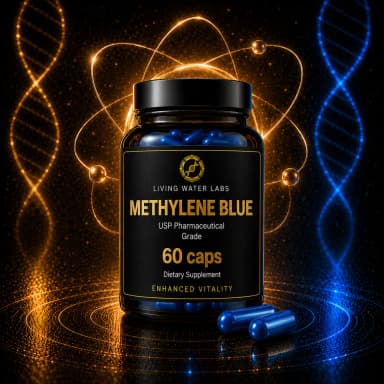
Methylene Blue
A phenothiazine dye studied for neuronal mitochondrial energy and cognition.
BEST STUDIED FOR
Neuronal bioenergetics research
R239View product →
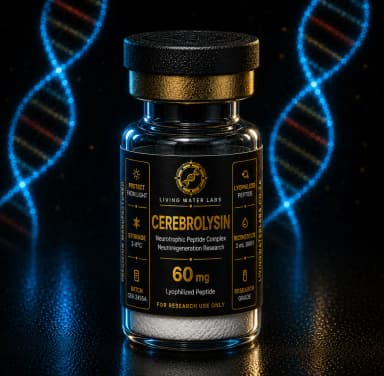
Cerebrolysin
A standardised neuropeptide preparation studied for neurotrophic effects.
BEST STUDIED FOR
Broad neurotrophic & neuro-recovery research
R1 179View product →
SIDE BY SIDE
| Methylene Blue | Cerebrolysin | |
|---|---|---|
| Type | Phenothiazine dye (small molecule) | Standardised multi-component neuropeptide preparation |
| Mechanism | Supports mitochondrial electron transport in neurons | Neurotrophic mimicry of nerve growth factors |
| Research focus | Cellular energy, cognition, neuroprotection | Neuro-recovery, cognitive-decline models |
| Composition | A single defined compound | A mixture of peptides + amino acids |
| Route | Oral / injectable; stains readily | Injectable / IV in research |
| Angle | Fuels the neuron (bioenergetics) | Signals growth and repair (neurotrophic) |
WHEN TO RESEARCH WHICH
Research methylene blue when the interest is neuronal bioenergetics — supporting mitochondrial electron transport, with cognition and neuroprotection literature. Research Cerebrolysin when the interest is broad neurotrophic activity across a standardised neuropeptide preparation, often in neuro-recovery models. One fuels the neuron; the other signals it to grow and repair.
FREQUENTLY ASKED
What is the difference between methylene blue and Cerebrolysin?
Methylene blue is a dye studied for supporting neuronal mitochondrial energy; Cerebrolysin is a standardised neuropeptide preparation studied for broad neurotrophic activity. One provides bioenergetic support, the other mimics nerve growth factors.
Can methylene blue and Cerebrolysin be researched together?
They support the brain through unrelated mechanisms — bioenergetics vs neurotrophic signalling — so they are sometimes studied as complementary angles. Both are for research purposes only.
Is methylene blue a peptide?
No — methylene blue is a phenothiazine dye, while Cerebrolysin is a preparation of neuropeptides and amino acids. Both are CoA-certified and supplied for research purposes only.
MORE COMPARISONS
All products supplied for research purposes only. Not for human consumption.