Peptides by sport: the evidence radar and the anti-doping line
Every sport stresses the body differently. We mapped eighteen of them onto the same ten-area evidence radar our product pages use, so you can see which compounds have published research in the areas your sport loads — and which of them are banned for tested athletes.
Tested athletes: read this first
Under the WADA 2026 Prohibited List (in force from 1 January 2026), BPC-157 is named under S0, TB-500 under S2.3, Ipamorelin and Tesamorelin under S2.2.4 and MOTS-c under S4.4.1 — all prohibited in and out of competition. Research peptides with no regulatory approval anywhere are caught by S0’s catch-all wording. Tested athletes: these are banned. South African athletes can check with SAIDS and the official 2026 List.
How a sport page works
Our radar scores every compound from 0 to 10 in ten fixed areas — Fat Loss, Appetite, Muscle, Repair, Skin, Gut & Immune, Cognition, Mood, Sleep and Longevity — by the strength of the published research, not by any promise of effect. Large human trials score highest; animal work tops out at 6. Russian clinical studies, such as the Selank, Semax and bioregulator trials, count as human evidence at full weight.
A sport page adds one layer: a hand-written map of that sport’s physical demands onto those ten areas, with a weight for each. Boxing weights Cognition and Repair heaviest because of head impact and hand and shoulder trauma; cycling weights Longevity & Energy because it is an aerobic sport; golf weights Cognition and Mood because it is decided by composure. The ranking is simply the weighted average — so it can never disagree with a product page.
What the ranking cannot do is tell you a compound works in athletes. Almost none of this research was done in athletes. The repair literature is mostly rodent tendon and ligament work; the cognition literature is mostly stroke, dementia and anxiety patients. Each page says where its evidence comes from, and each links the anti-doping status, because for a tested athlete that is the deciding fact.
Choose your sport
Contact sports and the brain
The strongest reason to write about peptides and contact sport honestly is the brain. In active professional boxers and MMA fighters, more fights and more years fighting were associated with smaller thalamic volumes and slower processing speed[1]. Among former Scottish international rugby players, 11.4% were diagnosed with a neurodegenerative disease against 5.4% of matched controls[2], and former Scottish professional footballers died with neurodegenerative disease as the primary cause at 1.7% against 0.5%[3].
No peptide has been shown to prevent or treat that harm, and there is no proven treatment for CTE. The international concussion consensus — first-authored from Wits in Johannesburg — is the standard of care: recognise, remove, and return in stages[4]. Our two evidence reviews cover what the neuropeptide trials actually found: neuropeptides and brain injury and Cerebrolysin and stroke.
WADA 2026 status, compound by compound
From the official WADA Prohibited List 2026. The same table appears, filtered, on every sport page.
| Compound | Status | What the 2026 List says |
|---|---|---|
| BPC-157 | Prohibited — named · S0 | BPC-157 is named by the 2026 List as an example of a non-approved substance (S0), prohibited in and out of competition. Tested athletes: this is banned. |
| TB-500 | Prohibited — named · S2.3 | The List names "Thymosin-β4 and its derivatives e.g. TB-500" under growth factors (S2.3), non-Specified, prohibited at all times. Tested athletes: this is banned. |
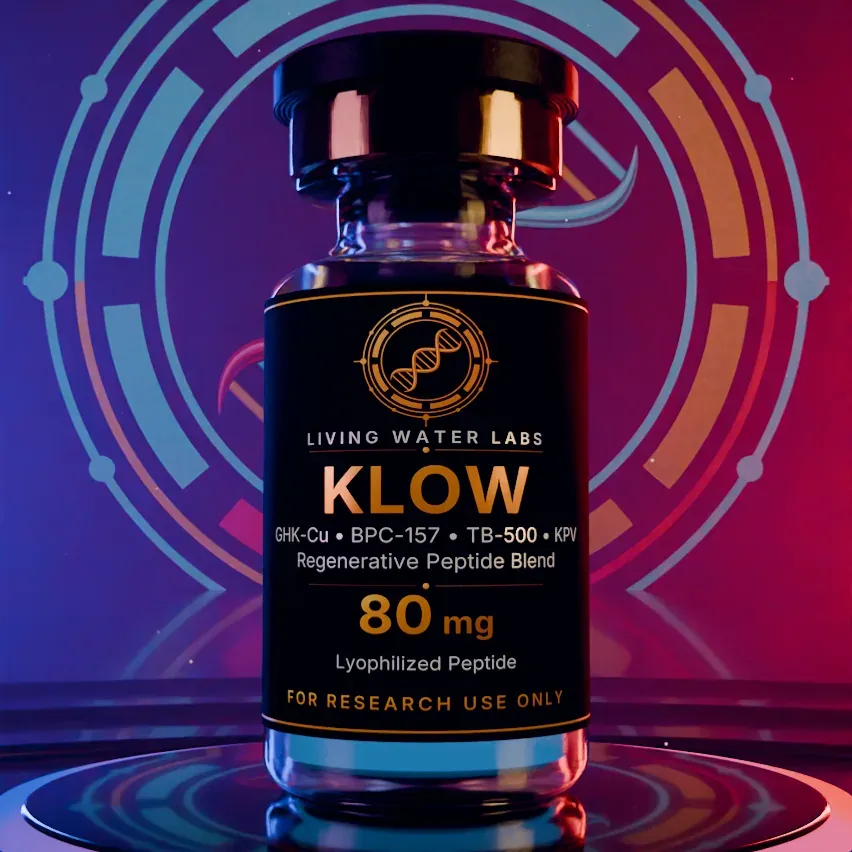
| GHK-Cu | Treat as prohibited · S0 / S2.3 | Not named. It has no approval as an injectable medicine, and S2.3 also reaches growth-factor modulators affecting regeneration. Tested athletes should treat injectable use as banned. |
| KPV | Treat as prohibited · S0 | Not named. KPV has no regulatory approval for human therapeutic use, which is the S0 test. Tested athletes should treat it as banned. |
| Ipamorelin | Prohibited — named · S2.2.4 | Ipamorelin is named among the growth hormone secretagogues (S2.2.4), non-Specified, prohibited at all times. Tested athletes: this is banned. |
| Tesamorelin | Prohibited — named · S2.2.4 | Tesamorelin is named as a GHRH analogue (S2.2.4), non-Specified, prohibited at all times — even though it is an approved medicine elsewhere. Tested athletes: this is banned. |
| MOTS-c | Prohibited — named · S4.4.1 | MOTS-c is named among the AMPK-activating metabolic modulators (S4.4.1), non-Specified, prohibited at all times. Tested athletes: this is banned. |
| Semax | Treat as prohibited · S0 (contested) | Not named. Semax is a registered medicine in Russia, so S0’s approval test is contested, and it is an ACTH(4-10) analogue (S2.2.2 covers corticotrophins). No published ruling — tested athletes should treat it as a risk and ask first. |
| Selank | Treat as prohibited · S0 (contested) | Not named. Selank is registered in Russia, which arguably takes it outside S0’s "no approval anywhere" wording — but anti-doping bodies do not publish a ruling on it. Tested athletes should treat it as a risk and ask their national anti-doping organisation first. |
| Cerebrolysin | Method limit (IV) · M2.2 | Not named, and approved as a medicine in a number of countries. Its trials use intravenous infusions; outside hospital care, IV infusions over 100 mL per 12 hours are a prohibited method (M2.2). |
| Epitalon | Treat as prohibited · S0 | Not named. Epitalon has no current approval as a medicine anywhere we can find, which is the S0 test. Tested athletes should treat it as banned. |
| Pinealon | Treat as prohibited · S0 | Not named. Pinealon has no regulatory approval for human therapeutic use, which is the S0 test. Tested athletes should treat it as banned. |
| NAD+ | Method limit (IV) · M2.2 | NAD+ itself is not named. Delivering anything by IV infusion or injection above 100 mL per 12 hours outside hospital care is a prohibited method (M2.2). |
| Glutathione | Method limit (IV) · M2.2 | Glutathione itself is not named. IV infusions or injections above 100 mL per 12 hours outside hospital care are a prohibited method (M2.2). |
| Retatrutide | Treat as prohibited · S0 | Not named. S0 covers "drugs under pre-clinical or clinical development" with no regulatory approval for human use; while Retatrutide remains unapproved, that wording applies to it. Tested athletes should treat it as banned. |
| Tirzepatide | Not on the List | Not named on the 2026 List and not captured by S0, because it is an approved medicine. GLP-1 agonists are not a prohibited class. Check your sport’s own rules and weight-category regulations. |
Sport and peptides: common questions
Are peptides banned in sport?
Many are. The WADA 2026 Prohibited List names BPC-157 (S0), TB-500 (S2.3), Ipamorelin, CJC-1295, sermorelin and Tesamorelin (S2.2.4) and MOTS-c (S4.4.1), all prohibited in and out of competition. S0 also catches any research compound with no regulatory approval for human use anywhere. For a tested athlete, assume a research peptide is banned unless an anti-doping authority says otherwise.
How are sports ranked against compounds?
Each sport’s demands are mapped onto the ten radar areas with weights from 1 to 3. A compound’s sport match is the weighted average of its evidence scores in those areas. The compound scores themselves are the same numbers shown on every product page.
Is this advice for athletes?
No. It is a structured reading of the published research and the anti-doping rules. The compounds are supplied for laboratory research only. Athletes with injuries should see a sports physician; tested athletes should speak to SAIDS or their federation before taking anything.
Which sports have a brain-health section?
Every sport with head impact or significant collision — boxing, MMA, martial arts, wrestling, rugby, soccer, hockey and netball — links to our evidence reviews on neuropeptides and brain injury and on Cerebrolysin and stroke.
Related hubs
Scores (0–10) rate the strength of the published research link in each area — large human trials score highest, then smaller human studies (Russian clinical research counted at full weight), then animal and lab work. They describe the literature, not an outcome for any person or athlete. All compounds are supplied strictly for laboratory research purposes and are not for human consumption.
Cited literature
- 1.Bernick C et al. Repeated head trauma is associated with smaller thalamic volumes and slower processing speed: the Professional Fighters’ Brain Health Study. Br J Sports Med, 2015. Cohort study · PMID 25633832
- 2.Russell ER et al. Neurodegenerative disease risk among former international rugby union players. J Neurol Neurosurg Psychiatry, 2022. Cohort study · PMID 36195436
- 3.Mackay DF et al. Neurodegenerative disease mortality among former professional soccer players. N Engl J Med, 2019. Cohort study · PMID 31633894
- 4.Patricios JS et al. Consensus statement on concussion in sport: the 6th International Conference on Concussion in Sport — Amsterdam, October 2022. Br J Sports Med, 2023. Consensus statement · PMID 37316210
In stock · ships from South Africa
In stock now


Supplied for laboratory research only · not for human use