Peptides for martial arts: BJJ, judo, karate and Muay Thai
Four disciplines, four injury signatures. This page breaks each one down, maps it onto the evidence radar, and shows which compounds carry published research in those areas — and which are banned in tested competition.
Head-impact sportWADA 2026 status checkedVerified PubMed citations
Tested athletes: read this first
Under the WADA 2026 Prohibited List (in force from 1 January 2026), BPC-157 is named under S0, TB-500 under S2.3, Ipamorelin and Tesamorelin under S2.2.4 and MOTS-c under S4.4.1 — all prohibited in and out of competition. Research peptides with no regulatory approval anywhere are caught by S0’s catch-all wording. Tested athletes: these are banned. South African athletes can check with SAIDS and the official 2026 List.
The demands
What martial arts asks of the body
"Martial arts" covers disciplines as different as a judo throw and a Muay Thai clinch. What they share is a long training life: many practitioners train for decades, often into their forties and fifties, which shifts the question from "how do I recover from this week" to "how do my joints and brain hold up over twenty years". That is why Longevity carries a small weight in the ranking here and not on the boxing page.
Judo and karate are Olympic sports with national federations under the WADA Code; BJJ competitors at IBJJF events and Muay Thai athletes under IFMA are also subject to anti-doping rules. South Africa has active federations for all four, with strong judo and karate club networks in Gauteng and KwaZulu-Natal and a fast-growing BJJ scene in Cape Town and Johannesburg.
The sections below take each discipline separately, because the research that is relevant to a BJJ player’s elbows is not the research relevant to a Muay Thai fighter’s shins.
Mapped to the evidence radar
Each demand below is mapped to one of the ten fixed research areas on our evidence radar. The heavier the weight, the more that area counts when compounds are ranked for Martial Arts: Recovery & Repair ×3, Cognition & Focus ×2, Sleep & Recovery Rhythm ×2, Mood & Calm ×1, Longevity & Energy ×1.
Joint locks, throws and impact· Recovery & Repair Elbow, knee, shoulder and finger injuries across all four disciplines. Repair-axis evidence in the catalogue is strongest in animal models.
Head contact and reaction speed· Cognition & Focus Striking arts and throws both carry head-impact risk; point sparring rewards reaction time. Cognition-axis research here is Russian clinical and Western stroke/TBI work.
Training volume· Sleep & Recovery Rhythm Camp-style twice-daily training compresses sleep. The catalogue’s sleep evidence is mainly pineal-bioregulator research in older adults.
Decades of practice· Longevity & Energy Martial artists often train into middle age, so long-term joint and brain ageing matter. Longevity research (Epitalon cohorts, MOTS-c, NAD+) is weighted lightly.
Discipline
Brazilian jiu-jitsu (BJJ)
BJJ is a grappling art with very little striking, so its injury load sits in joints: elbows from armbars, knees and ankles from leg locks and guard play, and the cervical spine from stacking and guillotines. Finger and toe sprains are near-universal. Head impact is lower than in striking arts but takedowns and slams still happen.
On the radar that means Repair dominates. The tissue-repair literature — BPC-157 in rat tendon-to-bone and tendon-fibroblast work, Thymosin β4 in mouse repair models — is extensive but preclinical. We have a separate BJJ recovery hub for readers who want the joint-focused view.
Discipline
Judo
Judo is a throwing art: repeated falls (ukemi), grip fighting and explosive hip loading. Shoulder dislocations and acromioclavicular injuries, knee ligament tears and finger injuries dominate the literature on judo injuries, and concussion from being thrown is a recognised risk, especially in younger players.
Judo is an Olympic sport under full WADA jurisdiction — every compound in the anti-doping table applies to a competitive judoka without exception.
Discipline
Karate
Karate ranges from point-sparring (WKF, Olympic-style kumite) to full-contact knockdown styles such as Kyokushin. Point karate carries lower but real head-contact risk; knockdown karate adds heavy body and leg conditioning, shin and forearm bruising, and a very high training volume.
For knockdown styles the Repair axis matters most; for point karate the weighting shifts toward reaction speed, focus and composure, where the Cognition and Mood axes pick up Russian clinical research on Semax and Selank — in patients, not athletes.
Discipline
Muay Thai
Muay Thai uses fists, elbows, knees and shins, plus the clinch. Shin and foot bone stress, rib bruising and head impact from elbows and knees are its signature. Training in Thailand-style camps often runs twice a day, six days a week, which makes sleep and recovery rhythm a real constraint.
Because it combines heavy striking with head impact, Muay Thai sits closest to the boxing profile on this page, and the brain-health research linked below applies directly.
By the evidence
Highest-scoring compounds for Martial Arts
Ranked by weighted evidence score across Martial Arts’s research areas. A reading aid for the literature — not a recommendation, and not a performance claim.
Top three for Martial Arts, overlaid · strength of published evidence per areaShow the scores as a table
Extensive randomized trials in vascular dementia and Alzheimer’s document clear cognitive protection.
Sleep & Recovery Rhythm5/10
Small studies report EEG normalisation in dementia; sleep-specific data are limited.
M2.2Not named, and approved as a medicine in a number of countries. Its trials use intravenous infusions; outside hospital care, IV infusions over 100 mL per 12 hours are a prohibited method (M2.2).
S0 (contested)Not named. Semax is a registered medicine in Russia, so S0’s approval test is contested, and it is an ACTH(4-10) analogue (S2.2.2 covers corticotrophins). No published ruling — tested athletes should treat it as a risk and ask first.
Buffers systemic allostatic stress load, accelerating psychological and physiological recovery.
Cognition & Focus8/10
Prevents stress-induced cognitive decline and boosts working memory and mental resilience under pressure.
Sleep & Recovery Rhythm7/10
Resolves anxiety-driven insomnia, restoring natural nocturnal melatonin and sleep continuity.
S0 (contested)Not named. Selank is registered in Russia, which arguably takes it outside S0’s "no approval anywhere" wording — but anti-doping bodies do not publish a ruling on it. Tested athletes should treat it as a risk and ask their national anti-doping organisation first.
S2.2.4Tesamorelin is named as a GHRH analogue (S2.2.4), non-Specified, prohibited at all times — even though it is an approved medicine elsewhere. Tested athletes: this is banned.
Scores (0–10) rate the strength of the published research link in each area — large human trials score highest, then smaller human studies (Russian clinical research counted at full weight), then animal and lab work. They describe the literature, not an outcome for any person or athlete. All compounds are supplied strictly for laboratory research purposes and are not for human consumption.
The literature
What published research says about martial arts
Concussion-in-sport consensus (Amsterdam 2022) applies to judo throws and striking arts alike.[1]
Rat Achilles-detachment model: BPC-157 improved functional, biomechanical and histological tendon-to-bone healing — the kind of preclinical evidence behind the Repair scores.[2]
Brain health
Head impact, concussion and the neuro research
Martial Arts involves repeated head impact, so brain-health research is part of the honest picture. Two evidence reviews on this site cover it without the marketing: neuropeptides and brain injury (concussion, traumatic brain injury and CTE — including the trials that found no benefit) and Cerebrolysin and stroke.
The short version: no peptide has been shown to prevent or treat sport-related brain injury, and there is no proven treatment for chronic traumatic encephalopathy. Anyone with concussion symptoms should be removed from play and assessed by a doctor, and return to sport should follow a graded protocol.
Anti-doping
WADA 2026 status of every compound on this page
Quoted from the WADA Prohibited List 2026 (in force 1 January 2026). Where a compound is not named, we say so and explain how the List’s wording applies.
WADA 2026 Prohibited List status per compound
Compound
Status
What the 2026 List says
Cerebrolysin
Method limit (IV) · M2.2
Not named, and approved as a medicine in a number of countries. Its trials use intravenous infusions; outside hospital care, IV infusions over 100 mL per 12 hours are a prohibited method (M2.2).
Semax
Treat as prohibited · S0 (contested)
Not named. Semax is a registered medicine in Russia, so S0’s approval test is contested, and it is an ACTH(4-10) analogue (S2.2.2 covers corticotrophins). No published ruling — tested athletes should treat it as a risk and ask first.
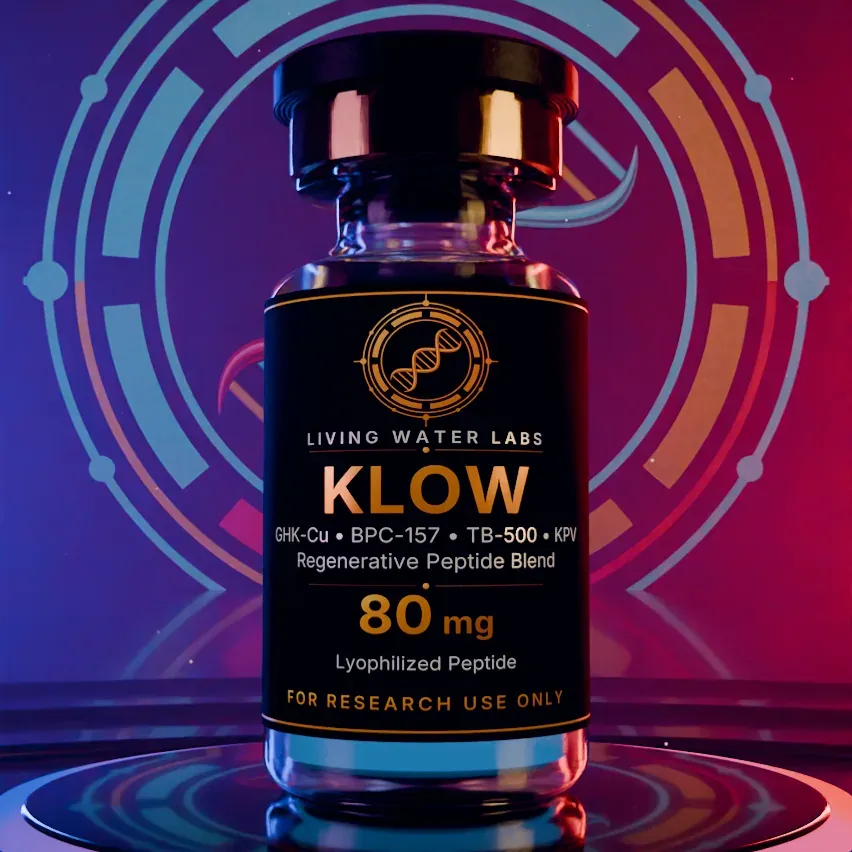
KLOW
Prohibited — named · S0 + S2.3
KLOW contains BPC-157 (named in S0) and TB-500 (named in S2.3). Tested athletes: this is banned.
Selank
Treat as prohibited · S0 (contested)
Not named. Selank is registered in Russia, which arguably takes it outside S0’s "no approval anywhere" wording — but anti-doping bodies do not publish a ruling on it. Tested athletes should treat it as a risk and ask their national anti-doping organisation first.
Epitalon
Treat as prohibited · S0
Not named. Epitalon has no current approval as a medicine anywhere we can find, which is the S0 test. Tested athletes should treat it as banned.
Tesamorelin
Prohibited — named · S2.2.4
Tesamorelin is named as a GHRH analogue (S2.2.4), non-Specified, prohibited at all times — even though it is an approved medicine elsewhere. Tested athletes: this is banned.
FAQ
Martial Arts: common questions
Which martial arts are under WADA rules?
Judo and karate (Olympic sports), plus federated competition in taekwondo, wrestling and Muay Thai (IFMA), apply the WADA Code. IBJJF also runs anti-doping testing. If you compete at national level in South Africa, assume the full 2026 Prohibited List applies.
Is BPC-157 studied for BJJ elbow and knee injuries?
Not in BJJ players. BPC-157’s tendon and ligament research is in rodents and cell culture; human data are small pilot reports. It is also named under S0 of the WADA List and banned in tested competition.
Why is Longevity weighted here and not for boxing?
Because martial-arts careers are long and many practitioners train recreationally into their fifties. The boxing page focuses on the competitive fight camp instead.
Supplied for laboratory research only · not for human use
Research Axes · 22 Goals
Shop by Goal
Start from what you want to change rather than from a compound name. Every goal below opens a full vertical — what the research points to, what we stock for it, and how to run it.