Sport research · Rugby

Peptides for rugby: collisions, recovery and the brain-health evidence

South Africa’s national sport is also one of the most studied collision sports on earth. This page maps rugby’s physical demands onto the evidence radar and is candid about what the research says — including the neurodegeneration data.

Head-impact sportWADA 2026 status checkedVerified PubMed citations

Tested athletes: read this first

Under the WADA 2026 Prohibited List (in force from 1 January 2026), BPC-157 is named under S0, TB-500 under S2.3, Ipamorelin and Tesamorelin under S2.2.4 and MOTS-c under S4.4.1 — all prohibited in and out of competition. Research peptides with no regulatory approval anywhere are caught by S0’s catch-all wording. Tested athletes: these are banned. South African athletes can check with SAIDS and the official 2026 List.

The demands

What rugby asks of the body

A professional rugby union match involves well over a hundred tackles and dozens of rucks, scrums and mauls, with forwards absorbing the heaviest collision load and backs the highest sprint speeds. Across a URC, Currie Cup or Varsity Cup season that becomes weeks of cumulative bruising, shoulder and knee injuries, hamstring strains and — the issue that now dominates the sport’s medical conversation — concussion and repeated sub-concussive impact.

The strongest long-term signal comes from Scotland. Russell and colleagues matched 412 former Scottish international rugby union players against 1,236 people from the general population and followed them for a median of 32 years: 11.4% of former players were diagnosed with a neurodegenerative disease versus 5.4% of the comparison group (hazard ratio 2.67). That is observational data, but it is the reason World Rugby has overhauled its head-injury protocols and why a rugby page that ignores the brain would be incomplete.

South African rugby runs from schoolboy rugby — Craven Week is a national institution — through club and provincial unions to the Springboks. Players in SARU-sanctioned competitions and school first XVs can be tested by SAIDS, and school-level positive tests are not rare. The anti-doping table below applies to every one of them.

Mapped to the evidence radar

Each demand below is mapped to one of the ten fixed research areas on our evidence radar. The heavier the weight, the more that area counts when compounds are ranked for Rugby: Recovery & Repair ×3, Cognition & Focus ×3, Sleep & Recovery Rhythm ×2, Muscle & Body Composition ×1, Gut & Immune ×1.

  • Collision and contact injuries · Recovery & Repair
    Shoulder (AC joint, dislocation), knee ligaments and ankle injuries from tackles and rucks. Repair research here is mostly animal work on BPC-157 and Thymosin β4.
  • Concussion and repeated head impact · Cognition & Focus
    The Scottish international cohort found roughly double the neurodegenerative-disease diagnoses among former players. Neuropeptide research (Cerebrolysin, Semax) is in stroke and hospital TBI, not rugby players.
  • Post-match recovery and travel · Sleep & Recovery Rhythm
    Evening kick-offs, adrenaline and long-haul travel across Super Rugby and URC time zones disrupt sleep. Pineal-bioregulator sleep research is in older adults.
  • Mass and power · Muscle & Body Composition
    Forwards need mass and power; GH-axis peptides that touch this axis are prohibited under S2.2.4.
By the evidence

Highest-scoring compounds for Rugby

Ranked by weighted evidence score across Rugby’s research areas. A reading aid for the literature — not a recommendation, and not a performance claim.

Fat LossAppetiteMuscleRepairSkin & HairGut & ImmuneCognitionMoodSleepLongevityKLOWCerebrolysinSemax
Top three for Rugby, overlaid · strength of published evidence per area
Show the scores as a table
Evidence score per research area, 0 to 10
AreaKLOWCerebrolysinSemax
Fat Loss & Metabolism212
Appetite Control111
Muscle & Body Composition623
Recovery & Repair1087
Skin, Hair & Glow1033
Gut & Immune1044
Cognition & Focus61010
Mood & Calm567
Sleep & Recovery Rhythm355
Longevity & Energy966

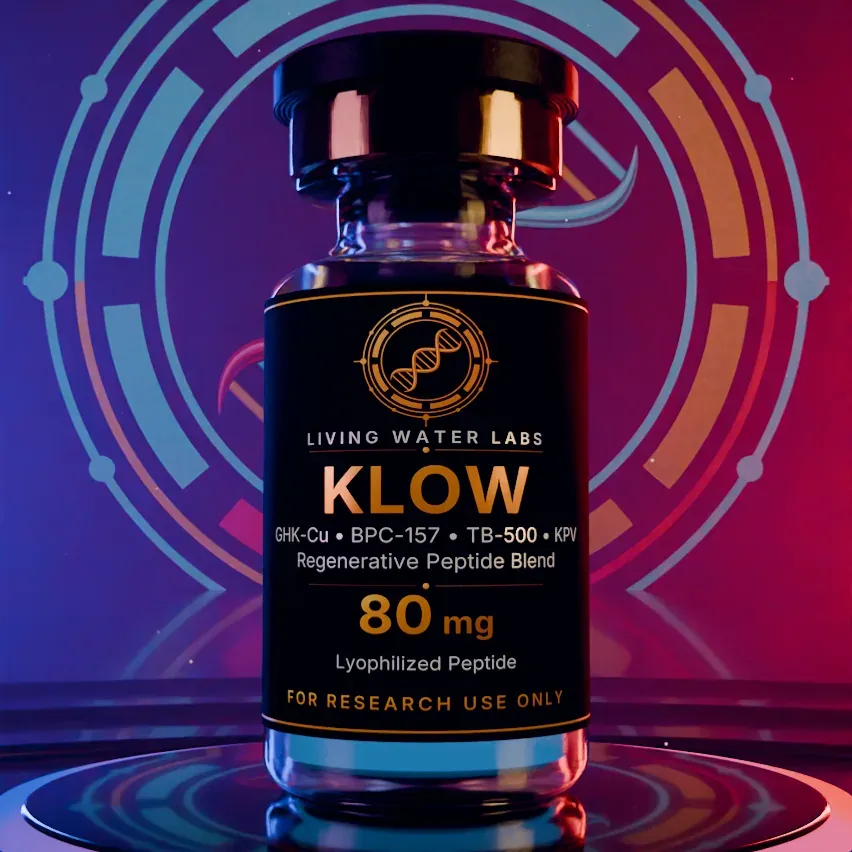
KLOW

In stock
7.0Rugby match
Recovery & RepairPrimary10/10

Extensive animal and tissue studies demonstrate rapid healing of tendon, ligament, muscle, and bone.

Cognition & Focus6/10

Copper chaperoning supports neurovascular integrity and dampens neuroinflammatory cascades.

Sleep & Recovery Rhythm3/10

Indirect — studied via anti-inflammatory and nervous-system gene-expression pathways; limited direct sleep data.

S0 + S2.3KLOW contains BPC-157 (named in S0) and TB-500 (named in S2.3). Tested athletes: this is banned.

Cerebrolysin

Restocking
7.0Rugby match
Recovery & RepairPrimary8/10

Robust stroke and traumatic brain injury rehabilitation trials prove functional neuroplastic recovery.

Cognition & Focus10/10

Extensive randomized trials in vascular dementia and Alzheimer’s document clear cognitive protection.

Sleep & Recovery Rhythm5/10

Small studies report EEG normalisation in dementia; sleep-specific data are limited.

M2.2Not named, and approved as a medicine in a number of countries. Its trials use intravenous infusions; outside hospital care, IV infusions over 100 mL per 12 hours are a prohibited method (M2.2).

Semax

Restocking
6.8Rugby match
Recovery & RepairPrimary7/10

Demonstrates robust neuro-rehabilitation and cerebral ischemic protection in clinical cohorts.

Cognition & Focus10/10

Registered medicine with extensive clinical trials proving rapid BDNF induction, memory, and stroke recovery.

Sleep & Recovery Rhythm5/10

Enhances daytime cognitive efficiency, promoting stabilized circadian sleep-wake balance.

S0 (contested)Not named. Semax is a registered medicine in Russia, so S0’s approval test is contested, and it is an ACTH(4-10) analogue (S2.2.2 covers corticotrophins). No published ruling — tested athletes should treat it as a risk and ask first.

Tesamorelin

Restocking
6.4Rugby match
Recovery & RepairPrimary6/10

Raises IGF-1, the axis studied for collagen synthesis and connective-tissue repair.

Cognition & Focus7/10

Randomized controlled trials confirm significant executive cognitive function gains in older adults.

Sleep & Recovery Rhythm7/10

GHRH signaling deepens Stage 4 slow-wave restorative sleep architecture.

S2.2.4Tesamorelin is named as a GHRH analogue (S2.2.4), non-Specified, prohibited at all times — even though it is an approved medicine elsewhere. Tested athletes: this is banned.

BPC-157

In stock
6.2Rugby match
Recovery & RepairPrimary9/10

Extensive animal and tissue studies demonstrate rapid healing of tendon, ligament, muscle, and bone.

Cognition & Focus5/10

Modulates the gut-brain axis and exhibits dopaminergic and serotonergic neuroprotective effects.

Sleep & Recovery Rhythm3/10

Indirect — studied via gut-brain and dopaminergic/serotonergic modulation in rodents; limited direct sleep data.

S0BPC-157 is named by the 2026 List as an example of a non-approved substance (S0), prohibited in and out of competition. Tested athletes: this is banned.

Selank

Restocking
6.1Rugby match
Recovery & RepairPrimary5/10

Buffers systemic allostatic stress load, accelerating psychological and physiological recovery.

Cognition & Focus8/10

Prevents stress-induced cognitive decline and boosts working memory and mental resilience under pressure.

Sleep & Recovery Rhythm7/10

Resolves anxiety-driven insomnia, restoring natural nocturnal melatonin and sleep continuity.

S0 (contested)Not named. Selank is registered in Russia, which arguably takes it outside S0’s "no approval anywhere" wording — but anti-doping bodies do not publish a ruling on it. Tested athletes should treat it as a risk and ask their national anti-doping organisation first.

Scores (0–10) rate the strength of the published research link in each area — large human trials score highest, then smaller human studies (Russian clinical research counted at full weight), then animal and lab work. They describe the literature, not an outcome for any person or athlete. All compounds are supplied strictly for laboratory research purposes and are not for human consumption.

The literature

What published research says about rugby

  • Former Scottish international rugby union players: 11.4% diagnosed with incident neurodegenerative disease vs 5.4% of matched controls over a median 32 years (HR 2.67).[1]
  • Amsterdam 2022 consensus on concussion in sport — first author from Wits Sport and Health, Johannesburg.[2]
  • Chronic traumatic encephalopathy described as a progressive tauopathy following repetitive mild TBI, staged I–IV from post-mortem brains.[3]
Brain health

Head impact, concussion and the neuro research

Rugby involves repeated head impact, so brain-health research is part of the honest picture. Two evidence reviews on this site cover it without the marketing: neuropeptides and brain injury (concussion, traumatic brain injury and CTE — including the trials that found no benefit) and Cerebrolysin and stroke.

The short version: no peptide has been shown to prevent or treat sport-related brain injury, and there is no proven treatment for chronic traumatic encephalopathy. Anyone with concussion symptoms should be removed from play and assessed by a doctor, and return to sport should follow a graded protocol.

Anti-doping

WADA 2026 status of every compound on this page

Quoted from the WADA Prohibited List 2026 (in force 1 January 2026). Where a compound is not named, we say so and explain how the List’s wording applies.

WADA 2026 Prohibited List status per compound
CompoundStatusWhat the 2026 List says
KLOWProhibited — named · S0 + S2.3KLOW contains BPC-157 (named in S0) and TB-500 (named in S2.3). Tested athletes: this is banned.
CerebrolysinMethod limit (IV) · M2.2Not named, and approved as a medicine in a number of countries. Its trials use intravenous infusions; outside hospital care, IV infusions over 100 mL per 12 hours are a prohibited method (M2.2).
SemaxTreat as prohibited · S0 (contested)Not named. Semax is a registered medicine in Russia, so S0’s approval test is contested, and it is an ACTH(4-10) analogue (S2.2.2 covers corticotrophins). No published ruling — tested athletes should treat it as a risk and ask first.
TesamorelinProhibited — named · S2.2.4Tesamorelin is named as a GHRH analogue (S2.2.4), non-Specified, prohibited at all times — even though it is an approved medicine elsewhere. Tested athletes: this is banned.
BPC-157Prohibited — named · S0BPC-157 is named by the 2026 List as an example of a non-approved substance (S0), prohibited in and out of competition. Tested athletes: this is banned.
SelankTreat as prohibited · S0 (contested)Not named. Selank is registered in Russia, which arguably takes it outside S0’s "no approval anywhere" wording — but anti-doping bodies do not publish a ruling on it. Tested athletes should treat it as a risk and ask their national anti-doping organisation first.
FAQ

Rugby: common questions

Are schoolboy rugby players drug-tested in South Africa?

Yes. SAIDS tests at school level, including at Craven Week, and the full WADA Prohibited List applies. BPC-157, TB-500, Ipamorelin and MOTS-c are all named on the 2026 List.

Can any peptide prevent concussion damage in rugby?

No. No peptide has been shown to prevent or treat concussion damage or CTE in athletes. The evidence for reducing harm is in the laws of the game, tackle height, head-injury assessment and graded return to play.

Is there a separate rugby recovery page?

Yes — our rugby-recovery hub covers soft-tissue recovery research in more depth. This page focuses on the whole demand profile, including the brain.

Keep reading

Related sports and research hubs

References

Cited literature

  1. 1.
    Russell ER et al. Neurodegenerative disease risk among former international rugby union players. J Neurol Neurosurg Psychiatry, 2022. Cohort study · PMID 36195436
  2. 2.
  3. 3.
    McKee AC et al. The spectrum of disease in chronic traumatic encephalopathy. Brain, 2013. Case series · PMID 23208308
Research Axes · 22 Goals

Shop by Goal

Start from what you want to change rather than from a compound name. Every goal below opens a full vertical — what the research points to, what we stock for it, and how to run it.

Browse all goals →

Health & Longevity

Systemic wellness — the compounds most studied for how you age, recover overnight and feel day to day.

Performance & Repair

Training, recovery and tissue-repair research — for getting back to the gym, the field or the trail sooner.

By Concern

Start from what you want to change — skin, hair, focus, mood, libido — and see what research points to.

Who It’s For

Curated entry points for specific researchers — women, veterinary work, first-timers and bulk buyers.

HPLC tested · Janoshik · Janoshik Certificates · Nationwide Delivery