Peptides for powerlifting: maximal load and the tendons that carry it
Squat, bench, deadlift — three lifts, three maximal loads, a lifetime of tendon stress. This page maps powerlifting’s demands onto the evidence radar and states the anti-doping line for tested federations.
Low-contact sportWADA 2026 status checkedVerified PubMed citations
Tested athletes: read this first
Under the WADA 2026 Prohibited List (in force from 1 January 2026), BPC-157 is named under S0, TB-500 under S2.3, Ipamorelin and Tesamorelin under S2.2.4 and MOTS-c under S4.4.1 — all prohibited in and out of competition. Research peptides with no regulatory approval anywhere are caught by S0’s catch-all wording. Tested athletes: these are banned. South African athletes can check with SAIDS and the official 2026 List.
The demands
What powerlifting asks of the body
Powerlifting is maximal strength expressed in three lifts. Unlike bodybuilding it is scored on the bar, not the body, and unlike weightlifting it is slow — which moves the injury risk from acute trauma to chronic loading: pec and distal biceps tendons on the bench and deadlift, patellar and quadriceps tendons in the squat, hip and lumbar strain across all three.
Strength athletes also compete for decades; masters categories are some of the biggest at any meet. That makes long-term tendon and joint health the central recovery question, and it is why Longevity carries a small weight here.
South African powerlifting runs through IPF-affiliated and untested federations. IPF events follow the WADA Code in full. As on the bodybuilding page, the anti-doping table is there so an athlete knows exactly what the tested line is.
Mapped to the evidence radar
Each demand below is mapped to one of the ten fixed research areas on our evidence radar. The heavier the weight, the more that area counts when compounds are ranked for Powerlifting: Muscle & Body Composition ×3, Recovery & Repair ×3, Sleep & Recovery Rhythm ×2, Longevity & Energy ×1.
Tendon stress under maximal load· Recovery & Repair Pec, biceps, patellar and quadriceps tendons. The tendon research for BPC-157 and TB-500 is preclinical.
Strength· Muscle & Body Composition Compounds on the Muscle axis (GH-axis peptides, MOTS-c) are all named on the 2026 WADA List.
Recovery between heavy days· Sleep & Recovery Rhythm Sleep quality underpins strength recovery; sleep research here is mostly in older adults.
Masters careers· Longevity & Energy Long competitive lives make tissue ageing relevant; longevity research carries a small weight.
By the evidence
Highest-scoring compounds for Powerlifting
Ranked by weighted evidence score across Powerlifting’s research areas. A reading aid for the literature — not a recommendation, and not a performance claim.
Top three for Powerlifting, overlaid · strength of published evidence per areaShow the scores as a table
Evidence score per research area, 0 to 10
Area
Ipamorelin
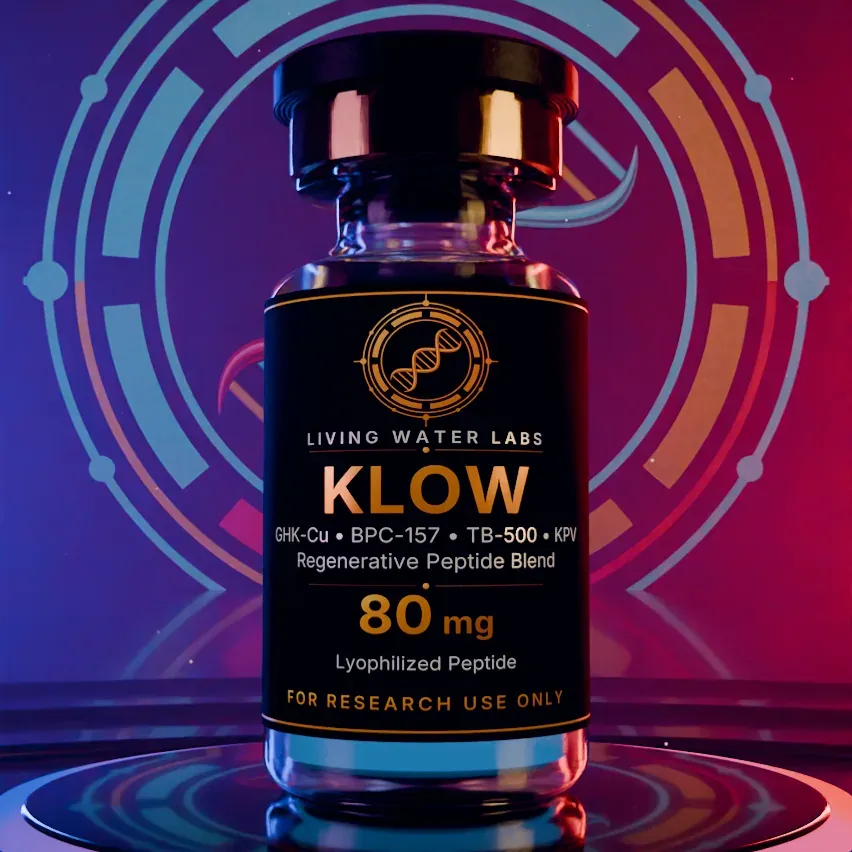
KLOW
Tesamorelin
Fat Loss & Metabolism
5
2
8
Appetite Control
3
1
3
Muscle & Body Composition
8
6
7
Recovery & Repair
7
10
6
Skin, Hair & Glow
5
10
5
Gut & Immune
5
10
4
Cognition & Focus
4
6
7
Mood & Calm
4
5
5
Sleep & Recovery Rhythm
7
3
7
Longevity & Energy
6
9
7
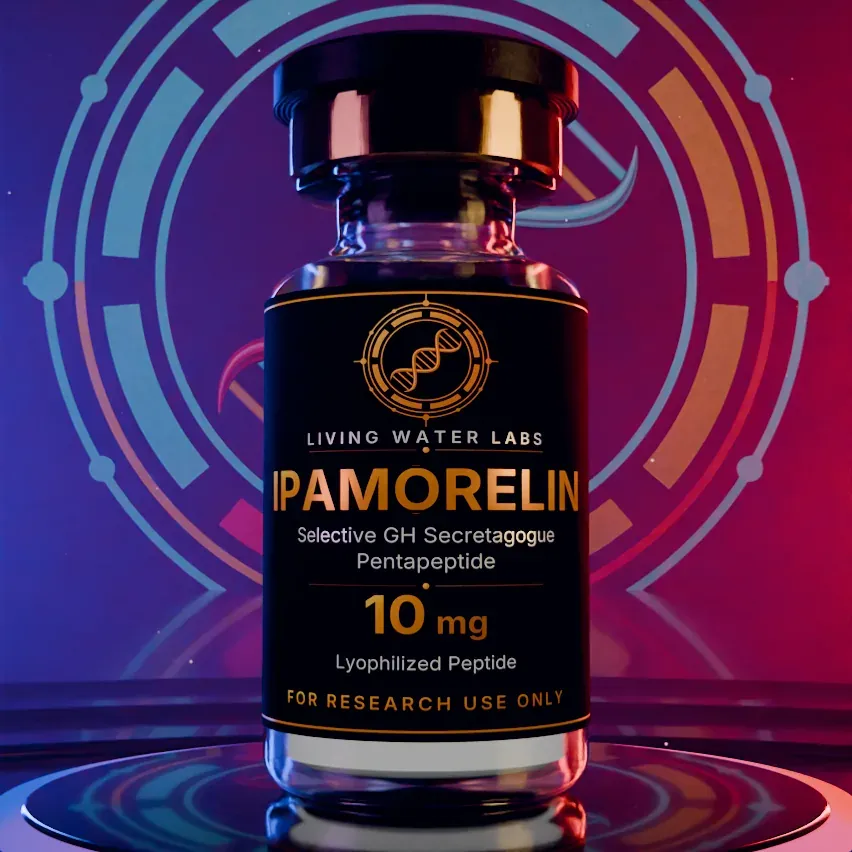
Ipamorelin
Restocking
7.2Powerlifting match
Muscle & Body CompositionPrimary8/10
Selectively stimulates potent, pulsatile growth hormone and IGF-1 release without elevating cortisol.
Recovery & Repair7/10
Enhanced IGF-1 upregulates collagen synthesis and accelerates connective tissue reconstruction.
Sleep & Recovery Rhythm7/10
Growth hormone pulses reinforce deep slow-wave restorative sleep cycles and REM stability.
S2.2.4Ipamorelin is named among the growth hormone secretagogues (S2.2.4), non-Specified, prohibited at all times. Tested athletes: this is banned.
S2.2.4Tesamorelin is named as a GHRH analogue (S2.2.4), non-Specified, prohibited at all times — even though it is an approved medicine elsewhere. Tested athletes: this is banned.
Indirect — mitochondrial and metabolic rhythm pathways; limited direct sleep data.
S4.4.1MOTS-c is named among the AMPK-activating metabolic modulators (S4.4.1), non-Specified, prohibited at all times. Tested athletes: this is banned.
Upregulates contractile protein repair and accelerates myofiber regeneration post-trauma.
Recovery & Repair9/10
Master actin-sequestering protein fragment driving rapid cell migration to sites of muscle/cardiac injury.
Sleep & Recovery Rhythm3/10
Indirect — downstream of tissue repair and reduced inflammation; limited direct sleep data.
S2.3The List names "Thymosin-β4 and its derivatives e.g. TB-500" under growth factors (S2.3), non-Specified, prohibited at all times. Tested athletes: this is banned.
Promotes myoblast proliferation and accelerates functional recovery after mechanical muscle tears.
Recovery & Repair9/10
Extensive animal and tissue studies demonstrate rapid healing of tendon, ligament, muscle, and bone.
Sleep & Recovery Rhythm3/10
Indirect — studied via gut-brain and dopaminergic/serotonergic modulation in rodents; limited direct sleep data.
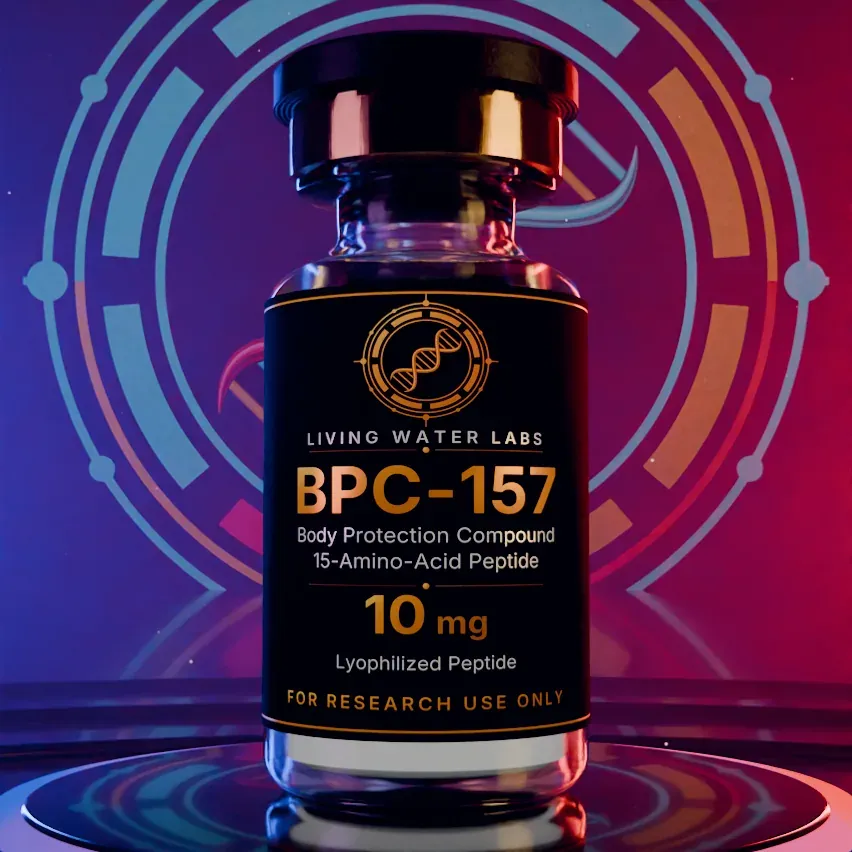
S0BPC-157 is named by the 2026 List as an example of a non-approved substance (S0), prohibited in and out of competition. Tested athletes: this is banned.
Scores (0–10) rate the strength of the published research link in each area — large human trials score highest, then smaller human studies (Russian clinical research counted at full weight), then animal and lab work. They describe the literature, not an outcome for any person or athlete. All compounds are supplied strictly for laboratory research purposes and are not for human consumption.
The literature
What published research says about powerlifting
BPC-157 increased tendon-fibroblast survival, outgrowth and migration in culture.[1]
Review of Thymosin β4 as a multi-functional regenerative peptide — actin sequestration and cell migration.[2]
Anti-doping
WADA 2026 status of every compound on this page
Quoted from the WADA Prohibited List 2026 (in force 1 January 2026). Where a compound is not named, we say so and explain how the List’s wording applies.
WADA 2026 Prohibited List status per compound
Compound
Status
What the 2026 List says
Ipamorelin
Prohibited — named · S2.2.4
Ipamorelin is named among the growth hormone secretagogues (S2.2.4), non-Specified, prohibited at all times. Tested athletes: this is banned.
KLOW
Prohibited — named · S0 + S2.3
KLOW contains BPC-157 (named in S0) and TB-500 (named in S2.3). Tested athletes: this is banned.
Tesamorelin
Prohibited — named · S2.2.4
Tesamorelin is named as a GHRH analogue (S2.2.4), non-Specified, prohibited at all times — even though it is an approved medicine elsewhere. Tested athletes: this is banned.
MOTS-c
Prohibited — named · S4.4.1
MOTS-c is named among the AMPK-activating metabolic modulators (S4.4.1), non-Specified, prohibited at all times. Tested athletes: this is banned.
TB-500
Prohibited — named · S2.3
The List names "Thymosin-β4 and its derivatives e.g. TB-500" under growth factors (S2.3), non-Specified, prohibited at all times. Tested athletes: this is banned.
BPC-157
Prohibited — named · S0
BPC-157 is named by the 2026 List as an example of a non-approved substance (S0), prohibited in and out of competition. Tested athletes: this is banned.
FAQ
Powerlifting: common questions
Does the IPF test for peptides?
Yes. IPF-affiliated federations test to the WADA Prohibited List, which names BPC-157, TB-500, Ipamorelin, Tesamorelin and MOTS-c in 2026.
Is there research on peptides for pec or biceps tendon tears?
Not in lifters. The tendon research is in animal models; a torn tendon is a surgical question for an orthopaedic surgeon.
How is powerlifting different from the bodybuilding page?
Powerlifting weights Repair and Muscle equally and does not weight Fat Loss at all — it is scored on the bar, not body composition.
Supplied for laboratory research only · not for human use
Research Axes · 22 Goals
Shop by Goal
Start from what you want to change rather than from a compound name. Every goal below opens a full vertical — what the research points to, what we stock for it, and how to run it.