Sport research · Soccer

Peptides for soccer: sprints, hamstrings and heading

Football is an intermittent endurance sport with a sprint-injury problem and a heading question. This page maps both onto the evidence radar and states the anti-doping position for every compound.

Head-impact sportWADA 2026 status checkedVerified PubMed citations

Tested athletes: read this first

Under the WADA 2026 Prohibited List (in force from 1 January 2026), BPC-157 is named under S0, TB-500 under S2.3, Ipamorelin and Tesamorelin under S2.2.4 and MOTS-c under S4.4.1 — all prohibited in and out of competition. Research peptides with no regulatory approval anywhere are caught by S0’s catch-all wording. Tested athletes: these are banned. South African athletes can check with SAIDS and the official 2026 List.

The demands

What soccer asks of the body

An outfield player covers roughly ten kilometres a match, broken into hundreds of accelerations, decelerations, jumps and changes of direction. That profile makes hamstring strains, groin and adductor injuries and ankle sprains the everyday injuries of the game, and it makes repeated-sprint capacity — an energy-system problem — the key fitness quality.

Heading is the other half of the story. Mackay and colleagues compared 7,676 former Scottish professional footballers with 23,028 matched controls: neurodegenerative disease was listed as the primary cause of death in 1.7% of former players against 0.5% of controls, even though the players had lower mortality from heart disease and lung cancer. That study helped drive heading limits in youth football in the UK and beyond.

In South Africa the PSL, the SAFA leagues and school football together make soccer the country’s most-played sport. SAFA applies the WADA Code, and PSL players are tested by SAIDS. The anti-doping table below is the part of this page that matters most to a professional.

Mapped to the evidence radar

Each demand below is mapped to one of the ten fixed research areas on our evidence radar. The heavier the weight, the more that area counts when compounds are ranked for Soccer: Recovery & Repair ×3, Cognition & Focus ×2, Sleep & Recovery Rhythm ×2, Longevity & Energy ×2, Muscle & Body Composition ×1.

  • Hamstrings, groins, ankles · Recovery & Repair
    Sprint-related muscle strains and ligament sprains dominate. Repair-axis research is strongest in rodent muscle and tendon models.
  • Repeated-sprint energy systems · Longevity & Energy
    The Longevity & Energy axis picks up mitochondrial research — MOTS-c raised physical capacity in mice and is exercise-induced in human muscle. It is also named under S4.4.1 of the WADA List.
  • Heading and collisions · Cognition & Focus
    The Scottish footballer cohort shows a neurodegeneration signal. Neuropeptide trials are in stroke and hospital TBI — covered on the brain-injury research page.
  • Fixture congestion · Sleep & Recovery Rhythm
    Midweek and weekend fixtures with evening kick-offs compress recovery sleep. Sleep evidence here is Russian clinical research in older adults.
By the evidence

Highest-scoring compounds for Soccer

Ranked by weighted evidence score across Soccer’s research areas. A reading aid for the literature — not a recommendation, and not a performance claim.

Fat LossAppetiteMuscleRepairSkin & HairGut & ImmuneCognitionMoodSleepLongevityKLOWCerebrolysinEpitalon
Top three for Soccer, overlaid · strength of published evidence per area
Show the scores as a table
Evidence score per research area, 0 to 10
AreaKLOWCerebrolysinEpitalon
Fat Loss & Metabolism212
Appetite Control111
Muscle & Body Composition623
Recovery & Repair1085
Skin, Hair & Glow1036
Gut & Immune1045
Cognition & Focus6106
Mood & Calm565
Sleep & Recovery Rhythm359
Longevity & Energy9610

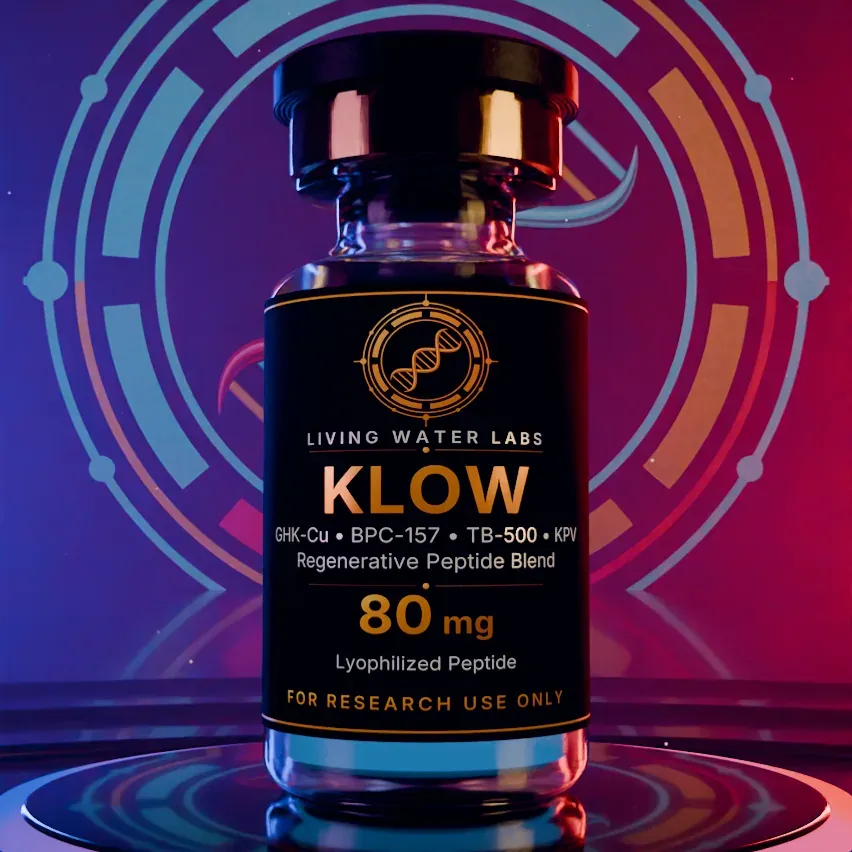
KLOW

In stock
7.2Soccer match
Recovery & RepairPrimary10/10

Extensive animal and tissue studies demonstrate rapid healing of tendon, ligament, muscle, and bone.

Cognition & Focus6/10

Copper chaperoning supports neurovascular integrity and dampens neuroinflammatory cascades.

Sleep & Recovery Rhythm3/10

Indirect — studied via anti-inflammatory and nervous-system gene-expression pathways; limited direct sleep data.

S0 + S2.3KLOW contains BPC-157 (named in S0) and TB-500 (named in S2.3). Tested athletes: this is banned.

Cerebrolysin

Restocking
6.8Soccer match
Recovery & RepairPrimary8/10

Robust stroke and traumatic brain injury rehabilitation trials prove functional neuroplastic recovery.

Cognition & Focus10/10

Extensive randomized trials in vascular dementia and Alzheimer’s document clear cognitive protection.

Sleep & Recovery Rhythm5/10

Small studies report EEG normalisation in dementia; sleep-specific data are limited.

M2.2Not named, and approved as a medicine in a number of countries. Its trials use intravenous infusions; outside hospital care, IV infusions over 100 mL per 12 hours are a prohibited method (M2.2).

Epitalon

Restocking
6.8Soccer match
Recovery & RepairPrimary5/10

Supports immune surveillance and restorative cellular maintenance cycles.

Cognition & Focus6/10

Long-term human cohorts report preserved cognitive faculties and neuroendocrine equilibrium.

Sleep & Recovery Rhythm9/10

Restores youthful nocturnal melatonin rhythm in clinical gerontology trials.

S0Not named. Epitalon has no current approval as a medicine anywhere we can find, which is the S0 test. Tested athletes should treat it as banned.

Tesamorelin

Restocking
6.7Soccer match
Recovery & RepairPrimary6/10

Raises IGF-1, the axis studied for collagen synthesis and connective-tissue repair.

Cognition & Focus7/10

Randomized controlled trials confirm significant executive cognitive function gains in older adults.

Sleep & Recovery Rhythm7/10

GHRH signaling deepens Stage 4 slow-wave restorative sleep architecture.

S2.2.4Tesamorelin is named as a GHRH analogue (S2.2.4), non-Specified, prohibited at all times — even though it is an approved medicine elsewhere. Tested athletes: this is banned.

Semax

Restocking
6.6Soccer match
Recovery & RepairPrimary7/10

Demonstrates robust neuro-rehabilitation and cerebral ischemic protection in clinical cohorts.

Cognition & Focus10/10

Registered medicine with extensive clinical trials proving rapid BDNF induction, memory, and stroke recovery.

Sleep & Recovery Rhythm5/10

Enhances daytime cognitive efficiency, promoting stabilized circadian sleep-wake balance.

S0 (contested)Not named. Semax is a registered medicine in Russia, so S0’s approval test is contested, and it is an ACTH(4-10) analogue (S2.2.2 covers corticotrophins). No published ruling — tested athletes should treat it as a risk and ask first.

NAD+

Restocking
6.5Soccer match
Recovery & RepairPrimary6/10

Accelerates cellular repair following metabolic or oxidative stressors.

Cognition & Focus7/10

Restores neuronal mitochondrial bioenergetics and counteracts age-dependent mental fatigue.

Sleep & Recovery Rhythm5/10

NAD+ couples to the circadian clock via SIRT1/CLOCK in mouse work (Science 2009).

M2.2NAD+ itself is not named. Delivering anything by IV infusion or injection above 100 mL per 12 hours outside hospital care is a prohibited method (M2.2).

Scores (0–10) rate the strength of the published research link in each area — large human trials score highest, then smaller human studies (Russian clinical research counted at full weight), then animal and lab work. They describe the literature, not an outcome for any person or athlete. All compounds are supplied strictly for laboratory research purposes and are not for human consumption.

The literature

What published research says about soccer

  • Former Scottish professional footballers: neurodegenerative disease as primary cause of death 1.7% vs 0.5% in matched controls.[1]
  • MOTS-c is exercise-induced in human skeletal muscle and improved physical capacity in young, middle-aged and old mice.[2]
Brain health

Head impact, concussion and the neuro research

Soccer involves repeated head impact, so brain-health research is part of the honest picture. Two evidence reviews on this site cover it without the marketing: neuropeptides and brain injury (concussion, traumatic brain injury and CTE — including the trials that found no benefit) and Cerebrolysin and stroke.

The short version: no peptide has been shown to prevent or treat sport-related brain injury, and there is no proven treatment for chronic traumatic encephalopathy. Anyone with concussion symptoms should be removed from play and assessed by a doctor, and return to sport should follow a graded protocol.

Anti-doping

WADA 2026 status of every compound on this page

Quoted from the WADA Prohibited List 2026 (in force 1 January 2026). Where a compound is not named, we say so and explain how the List’s wording applies.

WADA 2026 Prohibited List status per compound
CompoundStatusWhat the 2026 List says
KLOWProhibited — named · S0 + S2.3KLOW contains BPC-157 (named in S0) and TB-500 (named in S2.3). Tested athletes: this is banned.
CerebrolysinMethod limit (IV) · M2.2Not named, and approved as a medicine in a number of countries. Its trials use intravenous infusions; outside hospital care, IV infusions over 100 mL per 12 hours are a prohibited method (M2.2).
EpitalonTreat as prohibited · S0Not named. Epitalon has no current approval as a medicine anywhere we can find, which is the S0 test. Tested athletes should treat it as banned.
TesamorelinProhibited — named · S2.2.4Tesamorelin is named as a GHRH analogue (S2.2.4), non-Specified, prohibited at all times — even though it is an approved medicine elsewhere. Tested athletes: this is banned.
SemaxTreat as prohibited · S0 (contested)Not named. Semax is a registered medicine in Russia, so S0’s approval test is contested, and it is an ACTH(4-10) analogue (S2.2.2 covers corticotrophins). No published ruling — tested athletes should treat it as a risk and ask first.
NAD+Method limit (IV) · M2.2NAD+ itself is not named. Delivering anything by IV infusion or injection above 100 mL per 12 hours outside hospital care is a prohibited method (M2.2).
FAQ

Soccer: common questions

Are PSL footballers tested for peptides?

Yes. SAFA and the PSL operate under the WADA Code with SAIDS testing. BPC-157, TB-500, Ipamorelin and MOTS-c are named on the 2026 Prohibited List; unapproved research peptides are generally caught by S0.

Is MOTS-c used for football endurance?

MOTS-c has mouse endurance and human exercise-response research, but it is named under S4.4.1 (metabolic modulators) of the 2026 WADA List. For a tested player it is simply banned.

Does heading cause dementia?

The Scottish data show an association between a professional football career and neurodegenerative disease, not proof that heading alone is the cause. It is strong enough that heading limits now exist in youth football.

Keep reading

Related sports and research hubs

References

Cited literature

  1. 1.
    Mackay DF et al. Neurodegenerative disease mortality among former professional soccer players. N Engl J Med, 2019. Cohort study · PMID 31633894
  2. 2.
Research Axes · 22 Goals

Shop by Goal

Start from what you want to change rather than from a compound name. Every goal below opens a full vertical — what the research points to, what we stock for it, and how to run it.

Browse all goals →

Health & Longevity

Systemic wellness — the compounds most studied for how you age, recover overnight and feel day to day.

Performance & Repair

Training, recovery and tissue-repair research — for getting back to the gym, the field or the trail sooner.

By Concern

Start from what you want to change — skin, hair, focus, mood, libido — and see what research points to.

Who It’s For

Curated entry points for specific researchers — women, veterinary work, first-timers and bulk buyers.

HPLC tested · Janoshik · Janoshik Certificates · Nationwide Delivery