Sport research · Athletics & Running

Peptides for athletics and running: tendons, mitochondria and mileage

Running is repetitive load at scale — tens of thousands of steps a week through the same tendons. This page maps sprint and distance demands onto the evidence radar and is explicit about what is banned for tested athletes.

Low-contact sportWADA 2026 status checkedVerified PubMed citations

Tested athletes: read this first

Under the WADA 2026 Prohibited List (in force from 1 January 2026), BPC-157 is named under S0, TB-500 under S2.3, Ipamorelin and Tesamorelin under S2.2.4 and MOTS-c under S4.4.1 — all prohibited in and out of competition. Research peptides with no regulatory approval anywhere are caught by S0’s catch-all wording. Tested athletes: these are banned. South African athletes can check with SAIDS and the official 2026 List.

The demands

What athletics & running asks of the body

Athletics covers everything from a ten-second sprint to an ultra-marathon, but the injury picture is surprisingly consistent: Achilles and patellar tendinopathy, plantar fascia pain, bone stress injuries in the shin and foot, and hamstring strains in sprinters. Almost all of them are load-management injuries — the tissue was asked to adapt faster than it could.

The energy side differs by event. Sprinters live in the phosphocreatine and glycolytic systems; distance runners are limited by aerobic capacity, running economy and fuel. That is why the Longevity & Energy axis — which is where the catalogue’s mitochondrial research sits — carries a heavy weight on this page.

South Africa has one of the deepest road-running cultures in the world: Comrades, Two Oceans, parkrun in every town, and an elite track tradition. Athletics is also the sport with the most intensive out-of-competition testing, run through World Athletics’ Athletics Integrity Unit and SAIDS. The anti-doping box is not optional reading.

Mapped to the evidence radar

Each demand below is mapped to one of the ten fixed research areas on our evidence radar. The heavier the weight, the more that area counts when compounds are ranked for Athletics & Running: Recovery & Repair ×3, Longevity & Energy ×3, Sleep & Recovery Rhythm ×2, Muscle & Body Composition ×1, Gut & Immune ×1.

  • Tendons and bone stress · Recovery & Repair
    Achilles and patellar tendinopathy and bone stress injuries. The tendon literature for BPC-157 (rat Achilles, tendon fibroblasts) is the most cited, and it is preclinical.
  • Aerobic and mitochondrial capacity · Longevity & Energy
    MOTS-c, NAD+ and related research sit on this axis. MOTS-c is exercise-induced in human muscle — and named under S4.4.1 of the WADA List.
  • Early starts and high mileage · Sleep & Recovery Rhythm
    Pre-dawn long runs and race travel. Sleep-rhythm evidence here is Russian pineal-peptide research in older adults.
  • Runner’s gut · Gut & Immune
    GI distress is common in distance running. Gut research in the catalogue is mostly mouse colitis models (KPV) and BPC-157’s gastric work.
By the evidence

Highest-scoring compounds for Athletics & Running

Ranked by weighted evidence score across Athletics & Running’s research areas. A reading aid for the literature — not a recommendation, and not a performance claim.

Fat LossAppetiteMuscleRepairSkin & HairGut & ImmuneCognitionMoodSleepLongevityKLOWEpitalonIpamorelin
Top three for Athletics & Running, overlaid · strength of published evidence per area
Show the scores as a table
Evidence score per research area, 0 to 10
AreaKLOWEpitalonIpamorelin
Fat Loss & Metabolism225
Appetite Control113
Muscle & Body Composition638
Recovery & Repair1057
Skin, Hair & Glow1065
Gut & Immune1055
Cognition & Focus664
Mood & Calm554
Sleep & Recovery Rhythm397
Longevity & Energy9106

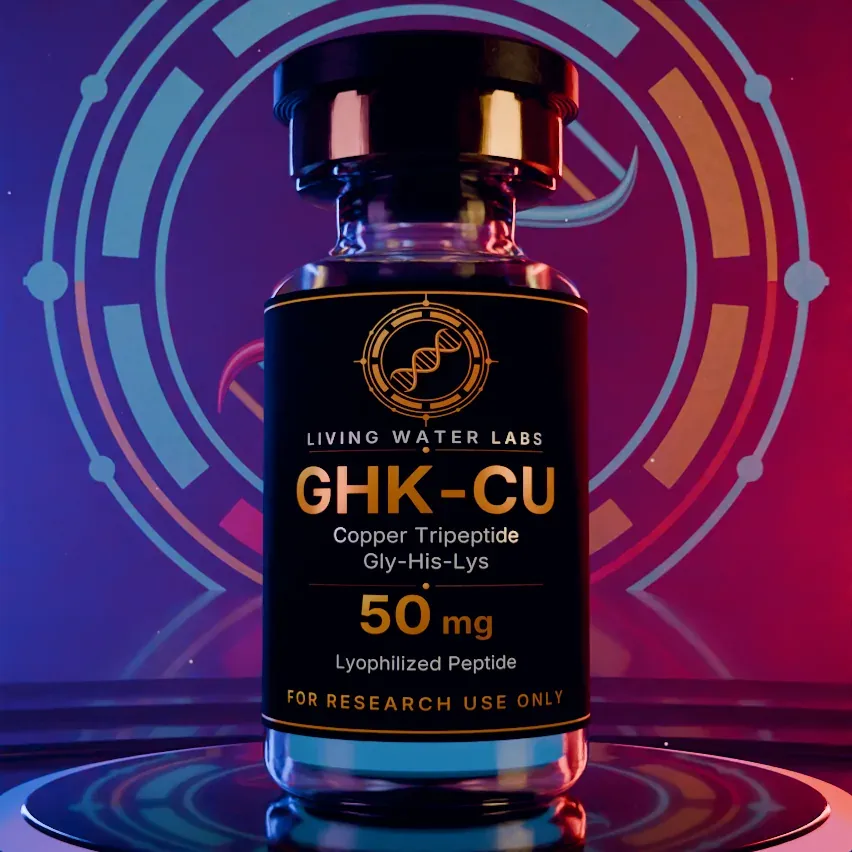
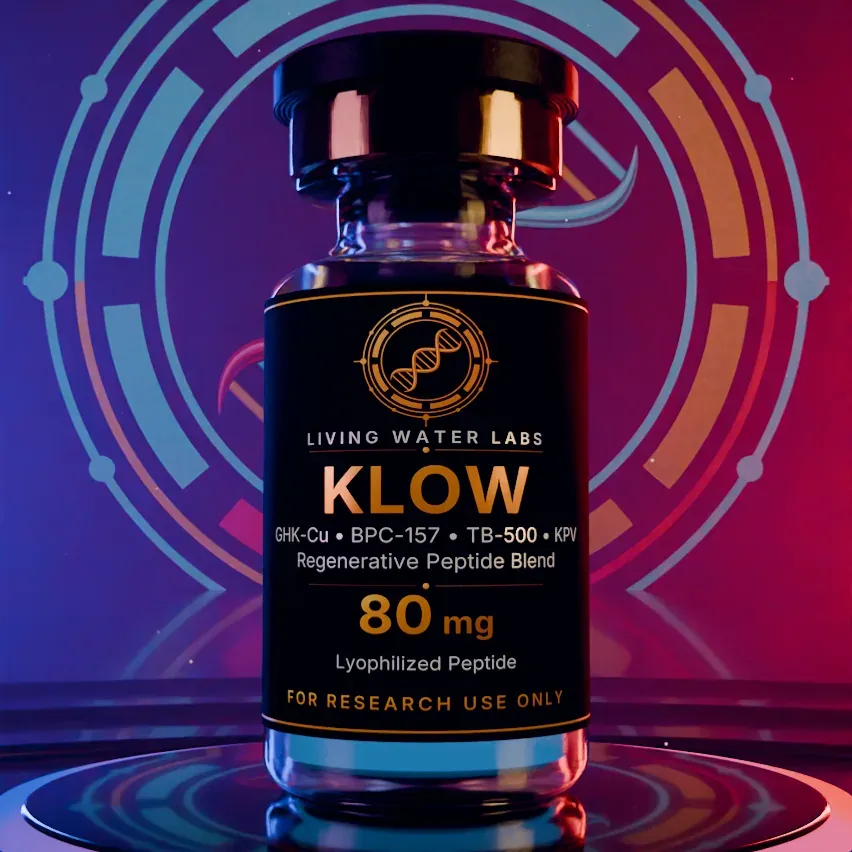
KLOW

In stock
7.9Athletics & Running match
Recovery & RepairPrimary10/10

Extensive animal and tissue studies demonstrate rapid healing of tendon, ligament, muscle, and bone.

Longevity & Energy9/10

Broad genomic studies reveal GHK resets over 4,000 human genes toward youthful expression patterns.

Sleep & Recovery Rhythm3/10

Indirect — studied via anti-inflammatory and nervous-system gene-expression pathways; limited direct sleep data.

S0 + S2.3KLOW contains BPC-157 (named in S0) and TB-500 (named in S2.3). Tested athletes: this is banned.

Epitalon

Restocking
7.1Athletics & Running match
Recovery & RepairPrimary5/10

Supports immune surveillance and restorative cellular maintenance cycles.

Longevity & Energy10/10

Extensive Russian clinical cohorts show reduced all-cause mortality; induces telomerase activity in vitro.

Sleep & Recovery Rhythm9/10

Restores youthful nocturnal melatonin rhythm in clinical gerontology trials.

S0Not named. Epitalon has no current approval as a medicine anywhere we can find, which is the S0 test. Tested athletes should treat it as banned.

Ipamorelin

Restocking
6.6Athletics & Running match
Recovery & RepairPrimary7/10

Enhanced IGF-1 upregulates collagen synthesis and accelerates connective tissue reconstruction.

Longevity & Energy6/10

Restores youthful pulsatile endocrine balance, offsetting somatopause-associated decline.

Sleep & Recovery Rhythm7/10

Growth hormone pulses reinforce deep slow-wave restorative sleep cycles and REM stability.

S2.2.4Ipamorelin is named among the growth hormone secretagogues (S2.2.4), non-Specified, prohibited at all times. Tested athletes: this is banned.

Tesamorelin

Restocking
6.4Athletics & Running match
Recovery & RepairPrimary6/10

Raises IGF-1, the axis studied for collagen synthesis and connective-tissue repair.

Longevity & Energy7/10

Reduces hepatic fat accumulation, improves lipid profiles, and optimizes somatotropic vitality.

Sleep & Recovery Rhythm7/10

GHRH signaling deepens Stage 4 slow-wave restorative sleep architecture.

S2.2.4Tesamorelin is named as a GHRH analogue (S2.2.4), non-Specified, prohibited at all times — even though it is an approved medicine elsewhere. Tested athletes: this is banned.

MOTS-c

Restocking
6.4Athletics & Running match
Recovery & RepairPrimary6/10

Stimulates mitochondrial biogenesis, accelerating cellular metabolic recovery post-exertion.

Longevity & Energy9/10

Mitochondrial-derived peptide acting as a master cellular regulator; preserves healthspan in ageing models.

Sleep & Recovery Rhythm4/10

Indirect — mitochondrial and metabolic rhythm pathways; limited direct sleep data.

S4.4.1MOTS-c is named among the AMPK-activating metabolic modulators (S4.4.1), non-Specified, prohibited at all times. Tested athletes: this is banned.

NAD+

Restocking
6.4Athletics & Running match
Recovery & RepairPrimary6/10

Accelerates cellular repair following metabolic or oxidative stressors.

Longevity & Energy9/10

Essential coenzyme for sirtuin longevity enzymes (SIRT1-7) and PARP DNA repair machinery.

Sleep & Recovery Rhythm5/10

NAD+ couples to the circadian clock via SIRT1/CLOCK in mouse work (Science 2009).

M2.2NAD+ itself is not named. Delivering anything by IV infusion or injection above 100 mL per 12 hours outside hospital care is a prohibited method (M2.2).

Scores (0–10) rate the strength of the published research link in each area — large human trials score highest, then smaller human studies (Russian clinical research counted at full weight), then animal and lab work. They describe the literature, not an outcome for any person or athlete. All compounds are supplied strictly for laboratory research purposes and are not for human consumption.

The literature

What published research says about athletics & running

  • MOTS-c: exercise raised MOTS-c in human skeletal muscle and circulation; late-life treatment increased physical capacity in mice.[1]
  • BPC-157 improved tendon-to-bone healing in a rat Achilles model — the origin of most "tendon" claims, and rodent evidence only.[2]
Anti-doping

WADA 2026 status of every compound on this page

Quoted from the WADA Prohibited List 2026 (in force 1 January 2026). Where a compound is not named, we say so and explain how the List’s wording applies.

WADA 2026 Prohibited List status per compound
CompoundStatusWhat the 2026 List says
KLOWProhibited — named · S0 + S2.3KLOW contains BPC-157 (named in S0) and TB-500 (named in S2.3). Tested athletes: this is banned.
EpitalonTreat as prohibited · S0Not named. Epitalon has no current approval as a medicine anywhere we can find, which is the S0 test. Tested athletes should treat it as banned.
IpamorelinProhibited — named · S2.2.4Ipamorelin is named among the growth hormone secretagogues (S2.2.4), non-Specified, prohibited at all times. Tested athletes: this is banned.
TesamorelinProhibited — named · S2.2.4Tesamorelin is named as a GHRH analogue (S2.2.4), non-Specified, prohibited at all times — even though it is an approved medicine elsewhere. Tested athletes: this is banned.
MOTS-cProhibited — named · S4.4.1MOTS-c is named among the AMPK-activating metabolic modulators (S4.4.1), non-Specified, prohibited at all times. Tested athletes: this is banned.
NAD+Method limit (IV) · M2.2NAD+ itself is not named. Delivering anything by IV infusion or injection above 100 mL per 12 hours outside hospital care is a prohibited method (M2.2).
FAQ

Athletics & Running: common questions

Can runners use MOTS-c or NAD+ in competition?

MOTS-c is named under S4.4.1 of the 2026 WADA List and is prohibited at all times. NAD+ itself is not named, but IV infusions over 100 mL per 12 hours outside hospital care are a prohibited method (M2.2).

Is BPC-157 studied for Achilles tendinopathy in runners?

Not in runners. The widely cited study is a rat Achilles-detachment model; human data are small pilots. It is also named under S0 of the WADA List.

Do you have pages for marathon and Comrades recovery?

Yes — see the marathon-recovery, runners and endurance-athletes hubs linked below for recovery-focused reading.

Keep reading

Related sports and research hubs

References

Cited literature

Research Axes · 22 Goals

Shop by Goal

Start from what you want to change rather than from a compound name. Every goal below opens a full vertical — what the research points to, what we stock for it, and how to run it.

Browse all goals →

Health & Longevity

Systemic wellness — the compounds most studied for how you age, recover overnight and feel day to day.

Performance & Repair

Training, recovery and tissue-repair research — for getting back to the gym, the field or the trail sooner.

By Concern

Start from what you want to change — skin, hair, focus, mood, libido — and see what research points to.

Who It’s For

Curated entry points for specific researchers — women, veterinary work, first-timers and bulk buyers.

HPLC tested · Janoshik · Janoshik Certificates · Nationwide Delivery