Alternative to Glucosamine for Joints
Glucosamine and chondroitin supply the raw materials of cartilage and hope the body uses them there — the evidence for symptom relief is mixed and takes months to read. Research into joint and connective-tissue biology looks at repair signalling instead: BPC-157 and TB-500 are the most-studied compounds for tendon, ligament and soft-tissue repair. Here is the honest comparison.
Glucosamine and chondroitin are the default joint-supplement pairing, built on an intuitive idea: cartilage is made of these molecules, so supply more of them. In practice, absorption is limited, the effect (if any) unfolds over months, and the clinical evidence is genuinely mixed. Researchers interested in the connective-tissue side of joints look at repair signalling rather than substrate. BPC-157 and TB-500 are the most-studied peptides for tendon, ligament and soft-tissue repair. Nothing here treats arthritis or any joint condition — those belong with a doctor — and everything is a research compound supplied strictly for research purposes only.
SIDE BY SIDE
| Glucosamine / chondroitin | Research approach | |
|---|---|---|
| What it is | Cartilage-substrate supplements | Research repair peptides (BPC-157, TB-500) |
| Mechanism | Supplies raw materials and hopes for cartilage use | Studied to signal connective-tissue repair |
| Evidence | Mixed; slow onset over months | Preliminary / research-stage |
| Studied for | Cartilage support | Tendon, ligament and joint-tissue repair research |
| Positioning | OTC joint supplement | Researched alongside, not a treatment |
| Regulatory status here | Dietary supplement | Research compounds — for research purposes only |
WHAT TO RESEARCH INSTEAD
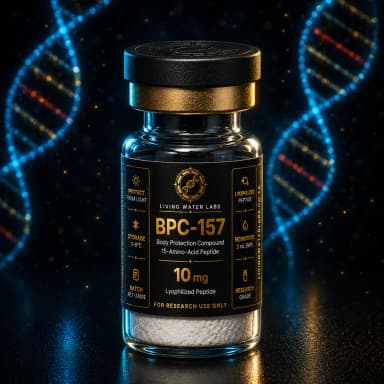
BPC-157
The most-studied localised repair peptide, investigated for tendon, ligament and connective-tissue recovery.
R439View product →
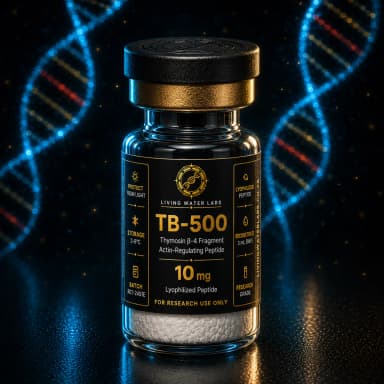
TB-500
A Thymosin Beta-4 fragment studied for systemic tissue repair; often paired with BPC-157 in recovery research.
R499View product →
Joint research range
The wider joint, tendon and connective-tissue research collection.
Explore joint research compounds →
WHEN TO RESEARCH WHICH
A glucosamine/chondroitin supplement is a low-risk, patient option where the research interest is cartilage substrate and a months-long timeframe is acceptable. Where the interest is the repair signalling around tendons, ligaments and connective tissue, BPC-157 and TB-500 have the deepest research literature. Any diagnosed joint condition or persistent pain belongs with a clinician, not a research compound — these are studied alongside, not as a treatment. For research purposes only.
FREQUENTLY ASKED
Is there an alternative to glucosamine for joints?
Researchers interested in connective-tissue repair study BPC-157 and TB-500 for tendon, ligament and soft-tissue biology, rather than supplying cartilage substrate. These are research compounds supplied strictly for research purposes only — not a treatment for any joint condition.
Do these treat arthritis or joint pain?
No, and we make no such claim. Any diagnosed joint condition or persistent pain belongs with a doctor. BPC-157 and TB-500 are studied for connective-tissue repair for research purposes only and are not a substitute for medical care.
What are BPC-157 and TB-500 studied for?
BPC-157 is studied for localised soft-tissue repair and TB-500 for systemic tissue recovery, a common research pairing for tendons and ligaments. Both are HPLC-verified and CoA-certified, for research purposes only.
MORE ALTERNATIVES
All products supplied for research purposes only. Not for human consumption. Nothing here is medical advice or a substitute for a qualified clinician.