Peptide Alternative to Botox
Botox relaxes the muscles under expression lines with a neurotoxin injection administered by a clinician. Cosmetic-science research has explored topical peptides — often called "peptide Botox" — studied for the appearance of expression lines through signalling rather than paralysis. The mechanisms are genuinely different, and so is what they can realistically do.
Botox (botulinum toxin) is a clinical procedure: a practitioner injects a neurotoxin that temporarily relaxes specific muscles, softening dynamic wrinkles. It is effective and it is medicine — nothing on this site replaces it or a qualified injector. What cosmetic-science researchers study instead are signalling peptides investigated for skin quality and the appearance of expression lines: GHK-Cu for collagen synthesis and remodelling, and the wider class of topical "neuro-cosmetic" peptides studied for expression-line appearance. These are research compounds supplied for research purposes only, and they are not claimed to relax muscles or match a clinical result.
SIDE BY SIDE
| Botox | Research approach | |
|---|---|---|
| What it is | Botulinum toxin — a clinical injectable | Signalling peptides (e.g. copper tripeptide-1) studied topically |
| Mechanism | Temporarily relaxes muscle contraction | Signals collagen synthesis / skin remodelling — not muscle paralysis |
| Target | Dynamic, movement-driven wrinkles | Skin structure, firmness, static texture |
| Administered by | A qualified clinician | Studied in research settings — for research purposes only |
| Honest scope | Proven muscle-relaxation effect | Studied for appearance of lines; not a Botox equivalent |
| Regulatory status here | Prescription medicine / procedure | Research compound — for research purposes only |
WHAT TO RESEARCH INSTEAD
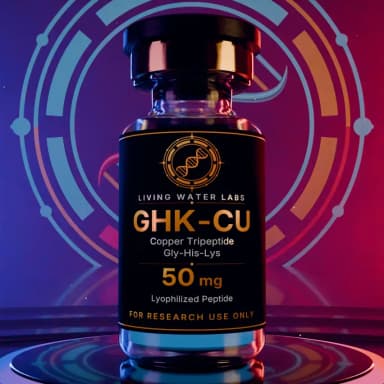
WHEN TO RESEARCH WHICH
Botox is a clinical treatment for dynamic, muscle-driven expression lines and only a qualified practitioner can provide it. Where the research interest is skin quality, firmness and collagen density — the static, texture side of ageing — GHK-Cu is the most-studied signalling peptide. The two address different layers (muscle movement vs skin structure), which is exactly why "peptide Botox" is a loose analogy rather than an equivalent. Everything here is supplied for research purposes only.
FREQUENTLY ASKED
Is there a peptide alternative to Botox?
Cosmetic-science research studies topical signalling peptides — sometimes called "peptide Botox" — such as GHK-Cu for skin quality and the appearance of expression lines. They work through collagen signalling, not muscle relaxation, so they are an analogy rather than an equivalent. Supplied for research purposes only.
Can a peptide match Botox results?
No, and we do not claim it can. Botox relaxes muscle movement; signalling peptides are studied for skin structure and texture — a different layer. GHK-Cu is a research compound for research purposes only, not a substitute for a clinical procedure.
What is GHK-Cu studied for in skin?
GHK-Cu (copper tripeptide-1) is one of the most-cited cosmetic peptides, studied for collagen synthesis, dermal remodelling, wound healing and antioxidant activity. Every batch is HPLC-verified and CoA-certified. For research purposes only.
MORE ALTERNATIVES
All products supplied for research purposes only. Not for human consumption. Nothing here is medical advice or a substitute for a qualified clinician.