Peptide Alternative to Retinol
Retinol is the reference anti-ageing active, but it is famously harsh — irritation, flaking and sun-sensitivity keep many people searching for a gentler route. In cosmetic-science research, copper peptides like GHK-Cu are studied for skin renewal and collagen signalling without the retinoid irritation profile. Here is the honest comparison.
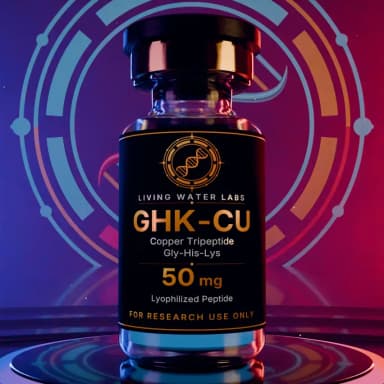
Retinol works, and it is well evidenced — but the same mechanism that drives cell turnover also drives the redness, peeling and photosensitivity that make it hard to tolerate. That is why the research interest in peptide actives has grown: compounds studied for skin renewal through signalling rather than forced turnover. GHK-Cu, the copper tripeptide, is the deepest-researched of these, investigated for collagen synthesis, remodelling and antioxidant activity. It is not a cosmetic product on this site and not a substitute for a dermatologist — it is a research compound supplied for research purposes only.
SIDE BY SIDE
| Retinol | Research approach | |
|---|---|---|
| Class | Vitamin A derivative (retinoid) | Copper-bound signalling tripeptide (copper tripeptide-1) |
| Mechanism studied | Forces cell turnover / keratinocyte differentiation | Signals collagen synthesis and dermal remodelling |
| Irritation profile (studied) | Well-known redness, flaking, photosensitivity | Studied as gentler; often tolerated where retinoids are not |
| Also researched for | Fine lines, texture, pigmentation | Wound healing, hair follicle, antioxidant activity |
| Sun-sensitivity | Increases — night use advised | Not associated with retinoid photosensitivity in studies |
| Regulatory status here | Cosmetic ingredient | Research compound — for research purposes only |
WHAT TO RESEARCH INSTEAD
WHEN TO RESEARCH WHICH
Retinol remains the reference active where the research question is aggressive cell turnover and the irritation trade-off is acceptable. Where the interest is skin renewal via signalling — with a gentler profile studied in the literature — GHK-Cu (copper tripeptide-1) is the most-cited peptide, researched for collagen synthesis and remodelling. The two are not mutually exclusive in research protocols; they act through different mechanisms. Supplied for research purposes only.
FREQUENTLY ASKED
What is a peptide alternative to retinol?
Copper peptides such as GHK-Cu are studied in cosmetic science for skin renewal and collagen signalling, and are researched as a gentler route than retinoids for skin quality. GHK-Cu is a research compound supplied strictly for research purposes only.
Is GHK-Cu gentler than retinol?
In the research literature GHK-Cu is studied as well-tolerated and is not associated with the redness, flaking and photosensitivity typical of retinoids, because it works through signalling rather than forced turnover. Evidence is preliminary and it is for research purposes only.
Can peptides and retinol be studied together?
They act through different mechanisms — retinoids force turnover, GHK-Cu signals collagen synthesis — so they are not mutually exclusive in research protocols. Every batch is HPLC-verified and CoA-certified.
MORE ALTERNATIVES
All products supplied for research purposes only. Not for human consumption. Nothing here is medical advice or a substitute for a qualified clinician.