Alternative to Hyaluronic Acid Serum
A hyaluronic acid serum binds water at the skin surface for a temporary plumping effect — but the molecule sits on top and the effect fades as it dries. Cosmetic-science research on copper peptides takes a structural angle instead: GHK-Cu is studied for signalling the skin to build its own matrix, including the glycosaminoglycans (of which hyaluronic acid is one) and collagen that hold water in place. Here is the honest difference.
Hyaluronic acid is a humectant — a large sugar molecule that draws and holds water. Applied topically it plumps the surface temporarily, but the molecule is too big to travel far into the skin and the effect is essentially cosmetic and short-lived. That is why researchers interested in skin structure look one level deeper. GHK-Cu, the copper tripeptide, is studied for prompting fibroblasts to synthesise the dermal matrix itself — the collagen and glycosaminoglycans that give skin its own capacity to hold water. It is not a moisturiser and not a substitute for one; it is a research compound supplied strictly for research purposes only.
SIDE BY SIDE
| Hyaluronic acid | Research approach | |
|---|---|---|
| What it is | A humectant glycosaminoglycan — a water-binding sugar | A copper-bound signalling tripeptide (copper tripeptide-1) |
| How it works | Binds water at the surface for a temporary plump | Signals fibroblasts to synthesise matrix, including GAGs and collagen |
| Duration | Fades as it dries; sits near the surface | Studied to change the skin's own building activity |
| Depth of action | Stratum corneum — large molecules penetrate little | Studied to act deeper through signalling |
| Best-studied for | Immediate surface hydration and plumping | Dermal remodelling, collagen synthesis, wound healing |
| Regulatory status here | Cosmetic ingredient | Research compound — for research purposes only |
WHAT TO RESEARCH INSTEAD
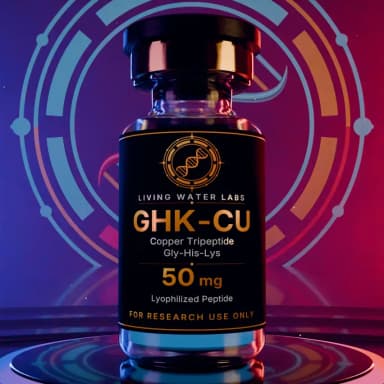
WHEN TO RESEARCH WHICH
A hyaluronic acid serum answers a surface question well: immediate, temporary hydration and plumping, cheaply and gently. Where the research interest is the skin's own structural capacity — the matrix and glycosaminoglycans that retain water long-term — GHK-Cu is the most-studied signalling peptide, investigated for dermal remodelling and matrix synthesis. The two act at different levels (surface water vs the structure that holds it), so they are complementary in research rather than substitutes. Supplied for research purposes only.
FREQUENTLY ASKED
What is an alternative to a hyaluronic acid serum?
Rather than binding water at the surface, researchers study copper peptides such as GHK-Cu that are investigated for signalling the skin to build its own matrix — including the glycosaminoglycans and collagen that retain water. GHK-Cu is a research compound supplied strictly for research purposes only, not a moisturiser.
Does GHK-Cu hydrate skin like hyaluronic acid?
Not by the same mechanism. Hyaluronic acid is a humectant that holds water on the surface; GHK-Cu is studied for prompting the skin to synthesise its own water-holding matrix. Evidence is preliminary and it is supplied for research purposes only.
Can they be researched together?
They work at different levels — surface humectant vs structural signal — so they are complementary rather than mutually exclusive in research protocols. Every batch of GHK-Cu is HPLC-verified and CoA-certified. For research purposes only.
MORE ALTERNATIVES
All products supplied for research purposes only. Not for human consumption. Nothing here is medical advice or a substitute for a qualified clinician.