Alternative to Microneedling
Microneedling creates thousands of controlled micro-injuries to trigger the skin's wound-healing collagen cascade — effective, but with needles, downtime and redness. GHK-Cu is one of the signalling molecules that cascade actually recruits, and it is studied as a chemical route to the same collagen-remodelling signal without the mechanical trauma. Here is the honest comparison.
Microneedling works by controlled injury: rolling or stamping fine needles into the skin provokes a wound-healing response, and that response drives collagen induction. It is a genuine mechanism with real evidence — and real downtime, redness and a procedure to sit through. What makes the peptide angle interesting is that copper peptides like GHK-Cu are among the signals that wound-healing cascade releases. GHK-Cu is studied for prompting collagen synthesis and dermal remodelling directly, and is frequently researched as a topical applied after microneedling. It is not a device or a procedure and does not replace one — a research compound supplied strictly for research purposes only.
SIDE BY SIDE
| Microneedling | Research approach | |
|---|---|---|
| What it is | A procedure — needles create controlled micro-injuries | A copper signalling peptide studied topically |
| Trigger for collagen | Mechanical wound-healing response | Direct chemical signalling of collagen synthesis |
| Downtime | Redness and recovery days after treatment | No mechanical trauma or downtime |
| Studied for | Collagen induction, texture, scarring | Collagen synthesis, dermal remodelling, wound healing |
| Honest scope | Proven mechanical collagen induction | Studied for the same signal; not a procedure equivalent |
| Regulatory status here | Cosmetic procedure | Research compound — for research purposes only |
WHAT TO RESEARCH INSTEAD
WHEN TO RESEARCH WHICH
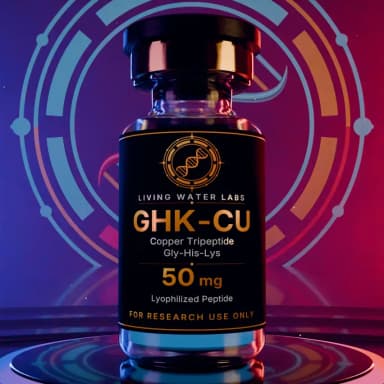
Microneedling is the proven route where the research interest is mechanical collagen induction across a whole area, and the downtime is acceptable. Where the interest is the biochemical signal that induction relies on — collagen synthesis and remodelling without physical trauma — GHK-Cu is the most-studied copper peptide, and is commonly researched both on its own and alongside needling. It is an adjunct and a different mechanism, not a device equivalent. Supplied for research purposes only.
FREQUENTLY ASKED
Is there an alternative to microneedling?
Copper peptides such as GHK-Cu are studied for signalling collagen synthesis and dermal remodelling directly — the same wound-healing signal microneedling provokes mechanically. GHK-Cu is a research compound supplied strictly for research purposes only, not a device or procedure.
Can a peptide match microneedling results?
They act differently — needling induces collagen through controlled injury, GHK-Cu is studied for the chemical signal — so it is an adjunct rather than an equivalent. GHK-Cu is frequently researched alongside needling. For research purposes only.
What is GHK-Cu studied for in skin?
GHK-Cu is one of the most-cited cosmetic peptides, studied for collagen synthesis, dermal remodelling, wound healing and antioxidant activity. Every batch is HPLC-verified and CoA-certified, with fast delivery across South Africa.
MORE ALTERNATIVES
All products supplied for research purposes only. Not for human consumption. Nothing here is medical advice or a substitute for a qualified clinician.