Alternative to Ice Baths for Recovery
Ice baths blunt acute inflammation and soreness through cold-induced vasoconstriction — but that same blunting can dampen the training-adaptation signal you were chasing, and it is a modality, not a mechanism. Research into tissue recovery looks at repair signalling: BPC-157 and TB-500 are the most-studied compounds for soft-tissue repair. Here is the honest difference.
Cold-water immersion is popular for good reason — it reliably reduces perceived soreness and acute swelling by constricting blood vessels and slowing inflammatory signalling. The catch, increasingly noted in the literature, is that dampening that post-exercise inflammation can also mute the adaptation (including hypertrophy) response, so timing matters. And an ice bath is a behaviour, not a compound. Researchers interested in the repair process itself study BPC-157 and TB-500, the most-cited soft-tissue repair peptides, which are investigated for supporting recovery through signalling rather than suppressing inflammation. Both are research compounds supplied strictly for research purposes only.
SIDE BY SIDE
| Ice baths | Research approach | |
|---|---|---|
| What it is | A recovery modality — cold-water immersion | Research repair peptides (BPC-157, TB-500) |
| Mechanism | Vasoconstriction blunts acute inflammation and soreness | Studied to signal soft-tissue repair |
| Trade-off | Can dampen the post-training adaptation signal | Different pathway — not inflammation suppression |
| Studied for | Perceived recovery, acute swelling | Tendon, ligament and muscle repair research |
| Form | Ice, tub and cold tolerance | Lyophilised research compounds |
| Regulatory status here | Lifestyle practice | Research compounds — for research purposes only |
WHAT TO RESEARCH INSTEAD
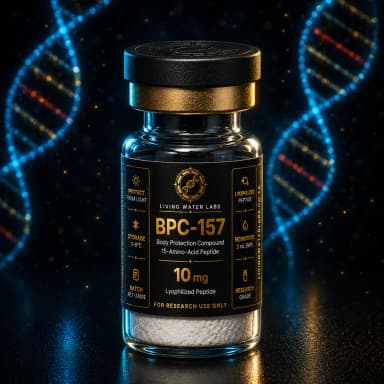
BPC-157
The most-studied localised soft-tissue repair peptide, investigated for tendon and muscle recovery.
R439View product →
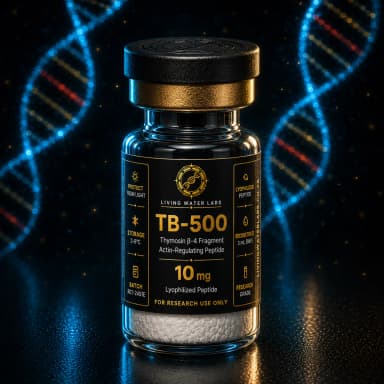
TB-500
A Thymosin Beta-4 fragment studied for systemic tissue recovery; a common pairing with BPC-157.
R499View product →
Recovery research range
The wider tissue-repair and recovery research collection.
Explore recovery compounds →
WHEN TO RESEARCH WHICH
An ice bath is a cheap, immediate tool where the goal is blunting acute soreness and swelling and the possible trade-off with adaptation is acceptable (or timed away from key adaptation windows). Where the research interest is the tissue-repair process — tendon, ligament and muscle recovery through signalling — BPC-157 and TB-500 are the most-studied compounds. Different mechanisms (acute inflammation control vs repair signalling), and complementary in research rather than equivalent. For research purposes only.
FREQUENTLY ASKED
Is there an alternative to ice baths for recovery?
Researchers interested in the repair process study BPC-157 and TB-500 for soft-tissue recovery, rather than blunting inflammation with cold. These are research compounds supplied strictly for research purposes only, not a wellness practice or treatment.
Do ice baths hurt muscle gains?
The literature suggests routinely blunting post-exercise inflammation with cold can dampen the adaptation signal, so timing matters — this is why some researchers explore repair-signalling compounds instead. BPC-157 and TB-500 are for research purposes only.
What are BPC-157 and TB-500 studied for?
BPC-157 is studied for localised soft-tissue repair and TB-500 for systemic tissue recovery, frequently researched together. Both are HPLC-verified and CoA-certified, supplied for research purposes only, with fast delivery across South Africa.
MORE ALTERNATIVES
All products supplied for research purposes only. Not for human consumption. Nothing here is medical advice or a substitute for a qualified clinician.