Alternative to Vitamin C Serum
A vitamin C serum is a topical antioxidant and a cofactor for collagen cross-linking — but L-ascorbic acid is notoriously unstable, oxidising and browning in the bottle, and low-pH formulas can sting. Copper-peptide research offers a stable alternative angle: GHK-Cu is studied for both antioxidant activity and direct collagen signalling. Here is how they compare.
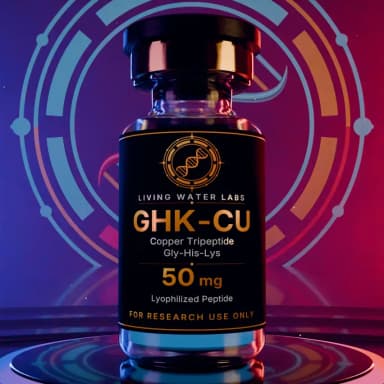
Vitamin C (L-ascorbic acid) earns its place in skincare: it is a genuine antioxidant and an enzymatic cofactor the body uses to cross-link collagen. Its weakness is chemistry — it oxidises rapidly on contact with air and light, browning and losing potency, and the low pH needed to keep it active irritates some skin. Researchers interested in the same outcomes without the instability study GHK-Cu, the copper tripeptide, which is investigated for antioxidant activity and for signalling collagen synthesis directly rather than acting as a substrate. It is not a cosmetic product here and not a substitute for one — a research compound supplied strictly for research purposes only.
SIDE BY SIDE
| Vitamin C | Research approach | |
|---|---|---|
| Class | A vitamin (L-ascorbic acid) | A copper-bound signalling tripeptide (copper tripeptide-1) |
| Mechanism | Antioxidant and enzymatic cofactor for collagen cross-linking | Signals collagen synthesis; antioxidant activity studied |
| Stability | Notoriously unstable — oxidises, browns, loses potency | Studied as stable; does not oxidise the same way |
| Irritation profile | Low-pH formulas can sting or irritate | Studied as well-tolerated |
| Also studied for | Brightening, pigmentation, photoprotection support | Dermal remodelling, wound healing, follicle support |
| Regulatory status here | Cosmetic ingredient | Research compound — for research purposes only |
WHAT TO RESEARCH INSTEAD
WHEN TO RESEARCH WHICH
A vitamin C serum is the right tool where the research question is topical antioxidant load and brightening, and the instability is managed with fresh, well-formulated product. Where the interest is a stable compound studied for both antioxidant activity and active collagen signalling — rather than acting as a cofactor and hoping for stability — GHK-Cu is the most-cited peptide. They act through different mechanisms (antioxidant substrate/cofactor vs signalling), so they are complementary in research. Supplied for research purposes only.
FREQUENTLY ASKED
What is an alternative to a vitamin C serum?
Copper peptides such as GHK-Cu are studied in cosmetic science for antioxidant activity and for signalling collagen synthesis directly — a stable alternative to unstable L-ascorbic acid. GHK-Cu is a research compound supplied strictly for research purposes only.
Is GHK-Cu more stable than vitamin C?
In the research literature GHK-Cu is studied as stable and does not oxidise and brown the way L-ascorbic acid does. It also acts by signalling rather than as an enzymatic cofactor. Evidence is preliminary and it is for research purposes only.
Can vitamin C and copper peptides be studied together?
They act through different mechanisms — antioxidant cofactor vs collagen signalling — so they are not mutually exclusive in research. Every batch of GHK-Cu is HPLC-verified with a CoA available on request. For research purposes only.
MORE ALTERNATIVES
All products supplied for research purposes only. Not for human consumption. Nothing here is medical advice or a substitute for a qualified clinician.