Peptide Alternative to Caffeine
Caffeine borrows energy against a crash and does nothing for actual cognition — it just blocks the signal that you are tired. Researchers interested in genuine focus and cellular energy look elsewhere: Semax, studied for focus and neuroprotection without stimulant load, and MOTS-c, studied for mitochondrial energy production rather than adenosine blockade.
Caffeine is an adenosine-receptor blocker: it masks tiredness rather than creating energy, which is why the crash and the tolerance follow. For focus and clarity specifically, that is a blunt tool. Semax, a Russian nootropic peptide (an ACTH(4-10) analog), is studied for focus, memory and neuroprotection via BDNF up-regulation — activation without the classic stimulant profile. For the energy side, MOTS-c is studied for actual mitochondrial energy production. Neither is a stimulant, a supplement or a substitute for sleep; both are research compounds supplied for research purposes only.
SIDE BY SIDE
| Caffeine | Research approach | |
|---|---|---|
| Mechanism | Blocks adenosine — masks tiredness | Semax: BDNF up-regulation; MOTS-c: mitochondrial energy |
| Effect on cognition | Alertness only — not memory or clarity | Semax studied for focus, memory and mental clarity |
| Crash / rebound | Common — energy is borrowed | Different mechanism; not an adenosine rebound in studies |
| Tolerance | Builds quickly | Studied at low research doses over defined windows |
| Energy source | None — unmasks existing fatigue | MOTS-c studied for actual mitochondrial ATP production |
| Regulatory status here | Stimulant / food | Research compounds — for research purposes only |
WHAT TO RESEARCH INSTEAD
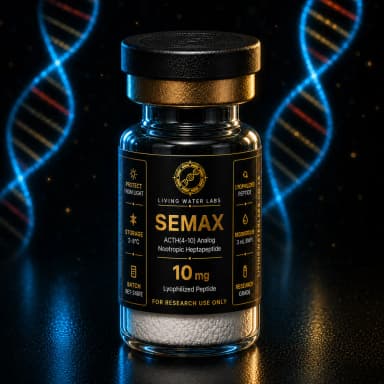
Semax
An ACTH(4-10) analog studied for focus, memory and neuroprotection — activation without stimulant load.
R429View product →
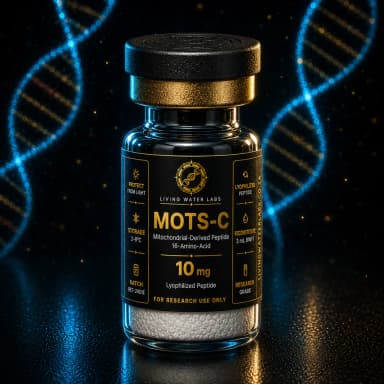
MOTS-c
A mitochondrial-derived peptide studied for genuine cellular energy production.
R420View product →
Cognitive research range
The wider focus, memory and neuroprotection research collection.
Explore cognitive compounds →
WHEN TO RESEARCH WHICH
Caffeine still wins for cheap, immediate, short-term alertness where a crash is acceptable. Where the research interest is sustained focus and cognitive drive without a stimulant load, Semax is the most-studied nootropic peptide. Where the interest is genuine cellular energy production rather than masking fatigue, MOTS-c targets the mitochondria directly. None of these replaces sleep, and all are supplied for research purposes only.
FREQUENTLY ASKED
Is there a peptide alternative to caffeine?
Researchers interested in focus without a stimulant crash study Semax (an ACTH(4-10) nootropic peptide), and for cellular energy they study MOTS-c. Both are research compounds supplied strictly for research purposes only — not stimulants or supplements.
What is Semax studied for?
Semax is studied for focus, memory, mental clarity and neuroprotection via BDNF up-regulation — activation without the classic stimulant load or crash. It is HPLC-verified, CoA-certified and supplied for research purposes only.
Do these replace sleep?
No. Nothing here is a substitute for sleep, and no compound is a stimulant or a medicine. Caffeine masks fatigue; these compounds are studied for distinct focus and energy pathways, for research purposes only.
MORE ALTERNATIVES
All products supplied for research purposes only. Not for human consumption. Nothing here is medical advice or a substitute for a qualified clinician.