GHK-Cu vs Matrixyl
GHK-Cu and Matrixyl are the two most-cited collagen-stimulating peptides in cosmetic science, and they are compared because they aim at the same outcome — more collagen — through related but distinct signalling routes. GHK-Cu is copper-dependent; Matrixyl is a matrikine that mimics collagen-breakdown fragments to prompt new synthesis.
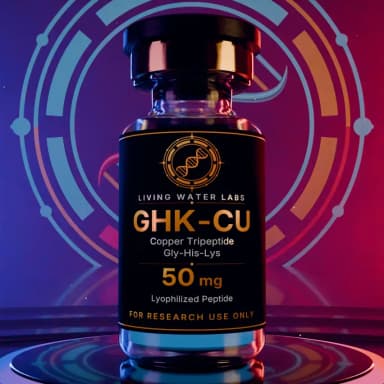
GHK-Cu
Copper tripeptide-1, studied for copper-dependent collagen signalling.
BEST STUDIED FOR
Copper-based collagen & antioxidant research
R449View product →
Matrixyl
Palmitoyl matrikine peptides studied for collagen and matrix synthesis.
BEST STUDIED FOR
Matrikine collagen-synthesis research
Explore skin research peptides →
SIDE BY SIDE
| GHK-Cu | Matrixyl | |
|---|---|---|
| Class | Copper-bound tripeptide (Gly-His-Lys + Cu) | Palmitoyl matrikine peptides (e.g. palmitoyl pentapeptide-4) |
| Mechanism | Copper-dependent collagen signalling + antioxidant activity | Matrikine signalling — mimics collagen fragments to prompt synthesis |
| Copper component | Yes — central to activity | No |
| Also studied for | Hair follicle, wound healing, remodelling | Wrinkle depth, firmness, extracellular matrix |
| Irritation | Gentle / well-tolerated | Gentle / well-tolerated |
| Combined use | Often layered with matrikine peptides | Often layered with copper peptides |
WHEN TO RESEARCH WHICH
Research GHK-Cu when the interest is copper-dependent collagen signalling with added antioxidant and wound-healing literature. Research Matrixyl (palmitoyl peptides) when the interest is matrikine signalling that mimics collagen fragments to trigger repair. Both are gentle, both are studied for firmness and wrinkle depth, and they are frequently layered in research formulations.
FREQUENTLY ASKED
What is the difference between GHK-Cu and Matrixyl?
GHK-Cu is a copper peptide that signals collagen synthesis through a copper-dependent route with antioxidant activity. Matrixyl is a matrikine — palmitoyl peptides that mimic collagen-breakdown fragments to trigger new synthesis. Related goal, different signalling.
Can GHK-Cu and Matrixyl be researched together?
Yes — they use different signalling routes to the same outcome, so they are frequently studied layered in the same research formulation. GHK-Cu is supplied for research purposes only.
Which has more research behind it?
GHK-Cu has the deeper and longer cosmetic-science literature, including antioxidant and wound-healing work; Matrixyl is well-studied specifically for wrinkle depth and firmness. GHK-Cu is HPLC-verified with a Certificate of Analysis.
MORE COMPARISONS
All products supplied for research purposes only. Not for human consumption.