Glutathione vs Methylene Blue
Glutathione and methylene blue are both studied in redox and cellular-defence research, but they behave very differently. Glutathione is a pure antioxidant scavenger; methylene blue is a redox-cycling dye that shuttles electrons in the mitochondria and can act as an antioxidant or a pro-oxidant depending on dose.
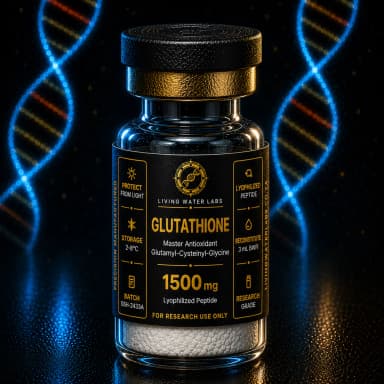
Glutathione
A tripeptide antioxidant that neutralises reactive oxygen species.
BEST STUDIED FOR
Antioxidant, detox & skin research
R829View product →
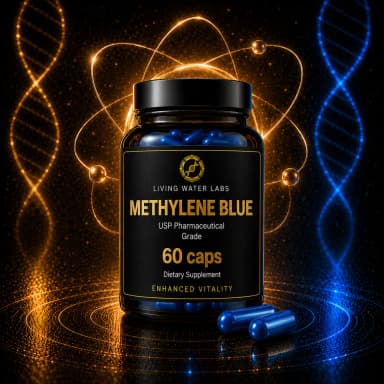
Methylene Blue
A phenothiazine redox dye studied as an alternative electron carrier in the mitochondria.
BEST STUDIED FOR
Mitochondrial energy & cognition research
R239View product →
SIDE BY SIDE
| Glutathione | Methylene Blue | |
|---|---|---|
| Class | Tripeptide thiol antioxidant | Phenothiazine dye (not a peptide) |
| Mechanism | Neutralises ROS; regenerates other antioxidants | Shuttles electrons in the mitochondrial transport chain |
| Dose behaviour | Antioxidant across its studied range | Hormetic — antioxidant low, pro-oxidant high |
| Research angle | Detox, skin brightening, immune | Cellular energy, cognition, neuroprotection |
| Handling note | Standard lyophilised handling | A potent dye — stains readily |
| Overlap | Cellular defence / redox | Cellular defence / redox |
WHEN TO RESEARCH WHICH
Research glutathione when the interest is direct antioxidant scavenging, detoxification and skin. Research methylene blue when the interest is mitochondrial electron transport and cellular energy — with the important caveat that its effect is hormetic (antioxidant-like at low concentrations, pro-oxidant at high ones). One neutralises reactive species; the other participates in electron transfer.
FREQUENTLY ASKED
What is the difference between glutathione and methylene blue?
Glutathione is a tripeptide antioxidant that neutralises reactive oxygen species. Methylene blue is a redox-cycling dye studied as an alternative electron carrier in the mitochondria, whose effect is dose-dependent. One scavenges, the other transfers electrons.
Is methylene blue an antioxidant?
In the literature methylene blue behaves hormetically — antioxidant-like at low concentrations and pro-oxidant at high ones — because it cycles electrons rather than simply scavenging. Glutathione is a more straightforward antioxidant. Both are for research purposes only.
Can they be researched together?
They target overlapping redox and cellular-defence questions from different angles, so they are sometimes studied in parallel. Both are HPLC-verified / CoA-certified and supplied for research purposes only.
MORE COMPARISONS
All products supplied for research purposes only. Not for human consumption.