Epithalon vs DSIP
Epithalon and DSIP are both studied in sleep research, which is why they are compared — but they address different parts of the problem. Epithalon regulates the pineal gland and the melatonin rhythm at the source; DSIP (delta sleep-inducing peptide) is studied specifically for slow-wave, deep-sleep architecture.
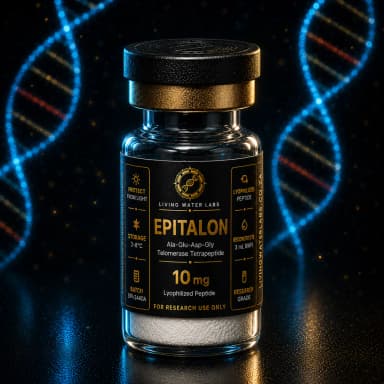
Epithalon
An AEDG tetrapeptide bioregulator studied for pineal and circadian regulation.
BEST STUDIED FOR
Circadian & melatonin-rhythm research
R339View product →
DSIP
Delta sleep-inducing peptide, studied for slow-wave deep-sleep phases.
BEST STUDIED FOR
Deep-sleep architecture research
Explore sleep research peptides →
SIDE BY SIDE
| Epithalon | DSIP | |
|---|---|---|
| Class | Tetrapeptide bioregulator | Nonapeptide (delta sleep-inducing peptide) |
| Sleep angle | Circadian rhythm / melatonin regulation at the source | Slow-wave, deep-sleep phases |
| Mechanism cited | Pineal-gland regulation; melatonin normalisation | Modulation of slow-wave sleep architecture |
| Also studied for | Telomerase, longevity, antioxidant effects | Stress response, sleep continuity |
| Timing role | Tunes when sleep is scheduled | Deepens the quality of that sleep |
| Availability here | Catalogue compound, HPLC-verified | Reference comparison — browse the sleep range |
WHEN TO RESEARCH WHICH
Research Epithalon when the interest is circadian regulation — normalising the melatonin rhythm through the pineal gland, with its longevity literature alongside. Research DSIP when the interest is sleep depth itself, the slow-wave phases of rest. One tunes the clock, the other deepens the sleep it schedules; they are sometimes studied together.
FREQUENTLY ASKED
What is the difference between Epithalon and DSIP?
Epithalon is a bioregulator studied for pineal and circadian regulation — normalising the melatonin rhythm at the source. DSIP is studied specifically for slow-wave deep-sleep phases. One tunes the timing of sleep, the other its depth.
Can Epithalon and DSIP be researched together?
Yes — because they address different aspects of sleep (circadian timing vs sleep depth), they are sometimes studied together. Epithalon is supplied for research purposes only.
Which is for deep sleep?
DSIP is the compound studied specifically for slow-wave, deep-sleep architecture; Epithalon is the circadian/melatonin regulator. Epithalon is HPLC-verified with a Certificate of Analysis.
MORE COMPARISONS
All products supplied for research purposes only. Not for human consumption.